Tokenization as a Service (TaaS) is a model in which a provider supplies the blockchain, smart contract, compliance and investor-management infrastructure needed to turn an asset into digital tokens, so a business can tokenize without building its own platform. In October 2026, $39 billion of tokenized real-world assets circulate on public blockchains, and a single-asset issuance through a provider such as Pixel Web Solutions starts from about $6,000.
Most businesses think blockchain and tokenization are only for crypto and tech enthusiasts. But the truth?
You don't need to be a professional token developer or a Fortune 500 company to tokenize your assets. Tokenization as a Service handles the technical, legal-workflow and security pieces on your behalf. This means any business, whether a startup, SME or enterprise, can use tokenization.
By adopting TaaS, organizations can turn assets into secure, blockchain-based tokens that are easy to manage, trade and integrate into business operations. From fractional ownership of high-value assets to faster settlement, TaaS bridges the gap between complex blockchain technology and practical business use cases.
This guide explains what Tokenization as a Service means, the delivery models, how it works step by step, what it costs, the 2026 rules you need to know and how to choose a provider.
Key Takeaways
- TaaS rents you a tokenization stack: the provider runs the token contracts, investor onboarding, cap table and distribution, and you pay setup and ongoing fees instead of building a platform.
- The market is real and growing: RWA.xyz tracks $39.02 billion in distributed tokenized assets held by 5.2 million addresses, with $14.95 billion in tokenized US Treasury funds.
- The term has two meanings: asset tokenization (turning property, funds or commodities into blockchain tokens) and data tokenization (replacing card numbers with tokens for payment security). Know which one a vendor sells.
- Four delivery models: full-service TaaS, white-label platforms, API infrastructure and custom builds trade control against speed and cost.
- Costs are predictable: Pixel Web Solutions' RWA single-asset issuance starts from $6,000, a platform MVP costs $25,000 to $50,000 and a full custom platform $100,000 to $150,000 or more.
- Regulation decides the design: in the UAE, a tokenized real-world asset is an Asset-Referenced Virtual Asset (ARVA) needing a VARA Category 1 licence in Dubai, and the SEC says a tokenized security is still a security.
What is Tokenization as a Service? A Quick Glance
Tokenization as a Service (TaaS) is a cloud-based, blockchain-powered model that lets businesses convert real-world or digital assets into digital tokens. Each token is a programmable record of ownership, or of a claim on income, held on a blockchain. TaaS providers combine the token technology with the compliance and administration around it, so tokens can be issued, held and transferred within the rules.
In simple terms, TaaS gives an organization ready-made infrastructure to issue and manage tokenized assets. By integrating Tokenization as a Service, businesses can manage assets securely and efficiently, and unlock new options for trading, fractional ownership and digital distribution.
Two Meanings of TaaS: Asset Tokenization vs Data Tokenization
Search results for "tokenization as a service" mix two different products. This matters, because the vendors, rules and costs are completely different.
| Asset Tokenization TaaS | Data and Payment Tokenization TaaS | |
|---|---|---|
| What gets tokenized | Real estate, funds, bonds, gold, private credit, carbon credits | Card numbers, bank details, personal data |
| What the token is | A blockchain token representing ownership or a claim | A random substitute value with no meaning outside the vault |
| Goal | Fractional ownership, liquidity, faster settlement | Reduce breach risk and PCI DSS compliance scope |
| Uses a blockchain | Yes | Usually no |
| Main rules | Securities and virtual asset law (SEC, MiCA, VARA, ADGM) | Payment and data protection rules (PCI DSS, GDPR) |
Credit card tokenization belongs to the second group. This guide focuses on asset tokenization, the meaning behind TaaS platforms for real-world assets, and mentions data tokenization where businesses need both.
The Tokenization Market in 2026: Key Numbers
Tokenization has moved from pilots into production. Here is what RWA.xyz's tokenization dashboard showed on 9 October 2026:
| Metric | Value |
|---|---|
| Distributed tokenized assets (freely transferable on-chain) | $39.02 billion |
| Represented assets (on-chain records of off-chain holdings) | $351.97 billion |
| Holders of tokenized assets | 5,187,866 |
| Tokenized US Treasury funds | $14.95 billion |
| Largest network for tokenized assets | Ethereum, $16.9 billion |
| Next largest networks | BNB Chain $5.8 billion, Solana $4.4 billion, Stellar $3.6 billion |
In tokenized treasuries, the largest platforms are Ondo ($2.9 billion), Franklin Templeton's Benji ($2.6 billion), Circle ($2.4 billion) and Securitize ($2.3 billion), according to RWA.xyz's Treasury fund league table. Each of these runs its own tokenization stack, which is exactly the infrastructure that TaaS makes available to smaller issuers.
How Does Tokenization as a Service (TaaS) Platform Work?

The following are the operational steps a business goes through when tokenizing assets with a TaaS provider. Here is how each stage is handled.
Asset Onboarding
The first step is to identify and register the assets. They can be physical items, such as real estate or commodities, or financial and digital assets such as fund units, invoices or intellectual property. During onboarding, the platform collects the asset's ownership records, valuation and supporting documents.
Check Legal Compliance
Next, the provider and your lawyers confirm the legal structure. This usually means placing the asset in a special purpose vehicle (SPV) or fund, deciding whether the token is a security, and choosing where it can be sold. Building legal requirements in at this stage avoids costly rework later.
Token Generation
Once the asset is structured legally, the platform generates digital tokens representing ownership or economic rights. The tokens are created on a blockchain using a standard such as ERC20 or the permissioned ERC3643 standard, which checks investor eligibility on every transfer. Token generation defines the asset's digital identity, including metadata, valuation and fractional ownership details.
Token Storage in Vault
After generation, tokens are held in a qualified custody solution or in investors' own wallets, depending on the rules. Secure storage protects tokens against theft, loss or unauthorized access, and regulated custodians give institutional investors confidence.
Smart Contract Creation
Smart contracts are self-executing programs on the blockchain that manage token behaviour. They handle transfers, transfer restrictions, distributions of income and corporate actions, without manual processing by intermediaries.
Token Distribution
The tokenized assets are then distributed to investors, through private placements, public offerings where allowed, or listings on regulated platforms. Each recipient receives a traceable digital asset, and the platform updates the investor register automatically.
Token Application
The core benefit of tokenization as a service is what tokens can do after issuance. Tokenized assets can be traded on secondary markets, used as collateral for loans, or integrated into payment and DeFi ecosystems, which gives them utility, liquidity and value.
With the working flow clear, let's look at how TaaS is delivered.
TaaS Delivery Models: Which One Fits Your Business?
Not every "TaaS" offer is the same. There are four main ways to get tokenization done, and they trade control against speed and cost.
| Model | What You Get | Time to First Token | Control | Best For |
|---|---|---|---|---|
| Full-service TaaS | The provider issues and administers tokens for you, often with legal partners | Weeks | Low | One-off issuances and first pilots |
| White-label platform | A branded tokenization platform you operate | 1 to 3 months | Medium | Asset managers and real estate firms planning several issuances |
| API or infrastructure TaaS | Token, compliance and wallet APIs you build your own product on | 1 to 3 months | Medium to high | Fintechs and banks with in-house developers |
| Custom build | A platform built from scratch to your design | 3 to 6 months or more | Full | Marketplaces and institutions with unique workflows |
A white-label tokenization platform is often the middle path: faster than a custom build, but you own the client relationship and the data.
Why Does Your Business Need to Adopt Tokenization as a Service?
Here are the benefits that explain why businesses adopt Tokenization as a Service.
Faster Transactions
In traditional financial systems, asset transfers and payments involve several intermediaries. Tokenization streamlines these processes by representing assets digitally on the blockchain.
For businesses, transfers that once took days can settle in minutes, around the clock. This improves cash flow, reduces delays and lets businesses react quickly to market opportunities.
Reduced Operational Costs
TaaS platforms automate many back-office tasks through smart contracts, from investor registers to income distributions. This reduces the need for intermediaries and manual reconciliation.
Businesses can direct funds toward growth instead of repetitive administration. Every transaction is recorded on an immutable ledger, which cuts errors and disputes.
Reduced Data Risks
Data breaches are a major concern for businesses handling sensitive information. In asset tokenization, investor identity data stays off-chain with the provider, while the blockchain holds only token balances and eligibility flags. In data tokenization, sensitive values such as card numbers are replaced with tokens that are useless if stolen.
Reduced data risk also strengthens customer trust, because clients and partners know their assets and personal information are handled securely.
Enhanced Business Opportunities
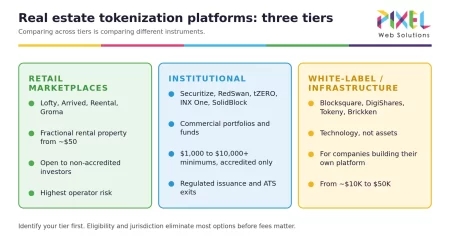
Tokenization opens new business models, such as fractional ownership, micro-investments and digital marketplaces. Businesses can tokenize real estate, fund units, bonds, commodities and even intellectual property, reaching a wider pool of investors. Many of the top real estate tokenization platforms operating today grew out of this model.
Tokenized assets can also connect to global financial ecosystems, which supports cross-border investment where the rules allow it.
Transparent Operations
Every transaction and change of ownership is recorded on a ledger, which reduces disputes and builds trust among stakeholders, investors and regulators. Transparent records also make audits and regulatory reporting simpler.
Flexibility and Scalability
Tokenization as a Service lets businesses digitize many asset types and operating models. As businesses grow or enter new regions, a tokenized system can handle more assets and investors without a matching rise in back-office staff.
Global Reach
Traditional asset management is limited by geography. Real-world asset tokenization lets businesses reach international investors, subject to each market's securities rules, and spread their investor base across regions.
We've seen why businesses adopt Tokenization as a Service. Now let's look at where TaaS is making the biggest impact.
Top Real World Use Cases of TaaS Solutions
The potential of Tokenization as a Service spans many industries. Here are the main real-world use cases.
Finance Sector
Tokenized treasury funds, money market funds and private credit are the largest use case today, with $14.95 billion in tokenized US Treasury funds alone. TaaS gives smaller asset managers the same issuance and transfer infrastructure the big platforms use.
Real Estate
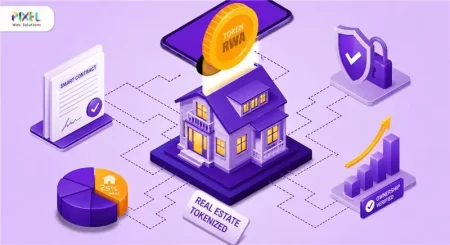
Property tokenization lets investors buy fractions of buildings and receive rental income through smart contracts. Our guide to real estate tokenization platform development covers the legal structures used.
Commodities and Gold
Gold and other commodities are tokenized so investors can hold a fraction of a bar stored in a vault. Tether Gold and Paxos Gold together exceed $5 billion in market value, according to CoinGecko on 9 October 2026.
Sensitive Data Handlers
Sectors such as insurance, telecom and IT handle large amounts of confidential data. Data tokenization services protect personal information from leaks or misuse by replacing it with tokens.
Healthcare and Medical Records
In healthcare, tokenized access rights can give patients control over who sees their records, while the records themselves stay in secure off-chain storage. This supports secure sharing between hospitals.
Ecommerce and Retail
In retail and ecommerce, tokenized loyalty points and gift cards improve transparency and can be redeemed across partner brands.
Gaming and Metaverse
Tokenization as a Service turns in-game items and virtual assets into verifiable, tradable tokens, giving players real digital ownership and opening new revenue streams.
Artworks and Digital Valuables
Artists and collectors use tokenization to make ownership verifiable and tradable, which reduces fraud and creates a global market for fractional art.
Government and Legal Sectors
Governments are piloting tokenized land registries and legal records to prevent forgery and boost transparency. Dubai's Land Department, for example, has run a property title tokenization project with VARA.
With these use cases in mind, the next question is cost.
How Much Does Tokenization as a Service Cost?
TaaS pricing usually combines a setup fee with ongoing platform or administration fees. Building your own platform swaps those ongoing fees for a larger upfront cost. Here are Pixel Web Solutions' published prices for each route:
| Route | Pixel Web Solutions Price | What It Covers |
|---|---|---|
| RWA single-asset issuance | from $6,000 | Token contracts, compliance rules and issuance for one asset |
| RWA tokenization platform MVP | $25,000 to $50,000 | Investor onboarding, KYC integration, primary issuance, dashboard |
| Advanced RWA platform | $50,000 to $100,000 | Secondary trading, multichain support, automated distributions |
| RWA platform built from scratch | $100,000 to $150,000+ | Fully custom workflows, integrations and licensing support |
Legal structuring, custody, audits and licensing fees are separate. The full line-by-line breakdown is in our guide to the cost to build an RWA tokenization platform.
Rent or Own? A Break-even Worked Example
Many TaaS providers charge an annual fee based on the value of assets on their platform. Their actual rates vary, so ask for a written quote. To see how the choice works, compare an ongoing fee with owning a platform at three illustrative fee levels:
| Assets Tokenized | Annual Fee at 0.25% | Annual Fee at 0.5% | Annual Fee at 1.0% |
|---|---|---|---|
| $5 million | $12,500 | $25,000 | $50,000 |
| $20 million | $50,000 | $100,000 | $200,000 |
| $100 million | $250,000 | $500,000 | $1,000,000 |
The maths is assets multiplied by the fee rate. For example, $20 million × 0.5% = $100,000 a year. Compare that with a $50,000 platform MVP: at $20 million in assets and a 0.5% fee, owning the platform pays back its build cost in about six months, before your own running costs.
The rule of thumb is simple. Full-service TaaS wins for a single small issuance. Once you plan several issuances or more than about $10 million in assets, a white-label or custom platform is usually cheaper over three years.
Tokenization Regulation Checklist for 2026
Tokens that represent real assets are regulated almost everywhere. Use this checklist with your legal adviser before you choose a TaaS model.
| Jurisdiction | Regulator | What Applies to Tokenized Assets |
|---|---|---|
| Dubai, UAE | VARA | Tokens backed by real-world assets are Asset-Referenced Virtual Assets (ARVAs), a Category 1 issuance that needs a VARA licence, a whitepaper and a risk disclosure statement under the VA Issuance Rulebook. |
| Abu Dhabi, UAE (ADGM) | FSRA | Security tokens are regulated as securities under ADGM's financial services rules, with its own licensing for issuers and venues. |
| UAE (onshore) | CBUAE and SCA | The new Central Bank law (Federal Decree Law No. 6 of 2025) covers firms that facilitate licensed financial activity through any technology, with a transition that ended in September 2026. Securities offerings fall under the SCA. |
| United States | SEC | The SEC staff's Statement on Tokenized Securities (28 January 2026) confirms that a tokenized security is still a security, whether the issuer or a third party tokenizes it. |
| European Union | ESMA and national regulators | MiCA covers crypto-assets that are not financial instruments; tokenized securities fall under MiFID II, with the DLT Pilot Regime for market infrastructure. |
The token standard helps here. ERC3643 builds identity and eligibility checks into every transfer, which makes it easier to enforce these rules on-chain.
How to Choose a Tokenization as a Service Provider
Choosing the right TaaS provider decides how fast you launch and how safe your investors are. Score each shortlisted provider on these points:
- Asset experience: Have they tokenized your asset class (real estate, funds, commodities, credit) before?
- Compliance stack: Do they support KYC and AML checks, investor eligibility rules and transfer restrictions on-chain?
- Jurisdiction fit: Can they work with your regulators, such as VARA, ADGM, the SEC or MiCA authorities?
- Chain choice: Do they support the networks your investors use? Ethereum, BNB Chain, Solana, Stellar and Avalanche lead in tokenized assets. Our guide to the best blockchains to create crypto tokens compares them.
- Custody and security: Who holds the tokens and the underlying asset, and are smart contracts audited?
- Exit and portability: Can you move your tokens, investor register and data if you switch providers?
- Pricing clarity: Is there a written setup fee, a clear ongoing fee and no hidden revenue share?
How to Tokenize Your Assets or Sensitive Data?
When businesses adopt Tokenization as a Service, the tokenization journey becomes smooth and needs minimal in-house development. Here's how assets are tokenized through a TaaS platform, step by step.
Assess Your Tokenization Needs
Start by identifying exactly what needs to be tokenized: physical assets like real estate, financial assets like fund units, or sensitive information like card data. This defines the purpose, the expected benefits and the scale.
Select the Right TaaS Provider
Next, choose a reliable Tokenization as a Service provider, using the criteria above: blockchain expertise, security, regulatory knowledge and customization. The chosen provider becomes your main partner through the tokenization journey.
Define Your Token Model
Decide what the tokens will do. Will they be security tokens, utility tokens, NFTs or stablecoins? Set the token supply, ownership rights, income rights and transfer rules. This is where the asset's digital identity is designed.
Compliance Checks
Complete the legal and compliance work: KYC and AML procedures, investor eligibility, regional securities rules and audit trails. This makes your tokenized assets legally sound.
Integrate With Business Systems
Tokenization isn't just about creating tokens. The real benefit comes from connecting them to operations: payment gateways, CRM, ERP, fund administration and reporting systems. Smart contracts then automate workflows and ownership updates.
Launch and Distribute Tokens
Finally, the tokens are launched and distributed to investors or users. This involves deploying the contracts, allocating tokens to wallets and enabling transfers or trading. Once live, the tokens work as secure representations of the underlying assets.
Why Should You Choose Pixel Web Solutions To Tokenize Your Assets?
Pixel Web Solutions is a leading crypto token development company that has offered token development services for more than a decade. With hands-on experience in blockchain, smart contracts and digital asset management, it is a trusted partner for asset owners. Its in-house team of developers and blockchain specialists has delivered projects across finance, real estate and commodities.
As an RWA tokenization company, Pixel Web Solutions supports every TaaS model: single-asset issuance from $6,000, white-label platforms and fully custom builds. Operating from Ras Al Khaimah, UAE and Madurai, India, the team understands VARA, ADGM and CBUAE requirements as well as international rules.
From understanding your asset tokenization needs to designing compliant token models and connecting them to your business workflows, Pixel Web Solutions makes sure your assets are tokenized securely and compliantly, and create real-world value. Contact the team to scope your project.
Frequently Asked Questions
What Is Tokenization as a Service in Simple Terms?
Tokenization as a Service is a ready-made service that turns an asset, such as property, a fund or gold, into blockchain tokens for you. The provider handles the smart contracts, investor checks and administration, and you pay fees instead of building the technology.
What Is the Difference Between TaaS and a White-Label Tokenization Platform?
With full-service TaaS, the provider runs the tokenization for you. With a white-label tokenization platform, you get the software under your own brand and run it yourself, which costs more upfront but gives you more control and lower ongoing fees as you grow.
How Much Does Tokenization as a Service Cost?
At Pixel Web Solutions, RWA single-asset issuance starts from $6,000, a platform MVP costs $25,000 to $50,000 and an advanced platform $50,000 to $100,000. Legal structuring, custody and licensing are extra and depend on the jurisdiction.
What Assets Can Be Tokenized?
Almost any asset with clear ownership can be tokenized, including real estate, government bonds, money market funds, private credit, gold and other commodities, art, carbon credits and invoices. Tokenized US Treasury funds are the largest category today.
Is Asset Tokenization Legal in the UAE?
Yes, within the licensing rules. In Dubai, tokens backed by real-world assets are regulated by VARA as Asset-Referenced Virtual Assets and need a Category 1 issuance licence. ADGM's FSRA regulates security tokens in Abu Dhabi, and onshore activity can fall under the CBUAE and SCA.
Which Blockchain Is Best for Tokenization?
Ethereum leads with $16.9 billion of distributed tokenized assets, followed by BNB Chain, Solana, Stellar and Avalanche. The best choice depends on where your investors are and which compliance standards, such as ERC3643, your structure needs.
Tokenization as a Service has moved from an experiment to working infrastructure in 2026. If you want to tokenize an asset without building a platform from scratch, Tokenization as a Service is the fastest compliant route, and Pixel Web Solutions can help you choose the right model.