









HYPERLEDGER BLOCKCHAIN DEVELOPMENT SERVICES
Hyperledger Blockchain Development Services for Networks That Run in Production
Hyperledger blockchain development services cover the design, build, and operation of permissioned networks on Hyperledger projects, most commonly Fabric and Besu. Pixel Web Solutions delivers network topology and consensus design, chaincode development, privacy architecture across channels and private data collections, identity and certificate infrastructure, enterprise integration, and the operational tooling a production network requires.
Fabric and Besu, deployed on premise, in private cloud, or hybrid. Built by a team that has handled certificate rotation, chaincode upgrades, and endorsement policy design on live networks.
Get your free Hyperledger architecture review
Tell us your participants, data sensitivity, and integration needs. Within 48 hours you get a project recommendation, a topology outline, and a realistic estimate.
- Privacy mechanism chosen before build, because moving data later means rebuilding
- Certificate lifecycle and chaincode upgrade paths designed in, not discovered in year two
- Source code, network configuration, and cryptographic material handed to you
78
Blockchain and enterprise projects delivered
10 weeks
Fastest Fabric network to production
17
Countries served
5
Hyperledger networks deployed and operated
Hyperledger proofs of concept are straightforward. Production networks are where teams get caught.
A Fabric network with two organisations on one machine runs in a day. What breaks later is structural: data placed in the wrong privacy construct, an endorsement policy that will not scale to real participant counts, an upgrade path nobody designed, and certificates that quietly expire and halt the network. All four are architecture decisions, and all four are expensive to reverse.
Data in the wrong place
Channels, private data collections, and off-ledger storage with on-chain hashes solve different problems. Choosing wrong means migrating data between constructs later, which on a live network with multiple organisations is close to a rebuild.
Certificates that expire
Fabric identities are certificates, and certificates expire. Networks have halted because nobody owned renewal. We design certificate lifecycle management, monitoring, and rotation procedures as part of the build, with expiry alerting well ahead of the date.
Endorsement policies that do not scale
A policy requiring endorsement from every organisation works at three participants and collapses at fifteen. We model endorsement against your target participant count and transaction volume before committing to a policy.
No upgrade path for chaincode
Business logic changes, and chaincode must change with it without losing state or coordination across organisations. We design the lifecycle and approval flow up front, so a routine change does not become a network-wide negotiation.
Our Hyperledger Blockchain Development Services
Nine build tracks covering network, contracts, privacy, identity, integration, and operations. This page sits under our enterprise blockchain development company practice, which covers whether a permissioned network fits at all. Delivered by the same team behind our wider blockchain software development company capability.
Hyperledger blockchain development services include project and platform selection, network topology and consensus design, chaincode and smart contract development, privacy architecture, membership and certificate authority configuration, enterprise system integration, performance engineering, security review, and ongoing node operations.
Hyperledger Fabric Network Design and Deployment
Organisation and peer topology, ordering service configuration, channel structure, endorsement policy design, state database selection, and deployment across on premise, private cloud, or hybrid environments.
Chaincode Development
Business logic in Go, Java, or Node.js, with deterministic execution, access control, comprehensive test coverage, and a designed chaincode lifecycle covering packaging, approval, commitment, and upgrade across organisations. Chaincode lifecycle, endorsement policy and upgrade paths through our blockchain smart contract development services.
Hyperledger Besu and Permissioned EVM Networks
Permissioned Ethereum-compatible networks with IBFT or QBFT consensus, privacy groups, permissioning contracts, and Solidity smart contracts, for organisations wanting EVM tooling in a controlled environment.
Privacy Architecture Design
Selection and implementation across channels, private data collections, off-ledger storage with on-chain anchoring, and privacy groups on Besu, with explicit reasoning documented for each data category.
Identity, Membership and Certificate Infrastructure
Membership service provider configuration, certificate authority deployment, enrolment and registration flows, attribute-based access control, certificate lifecycle management, and verifiable credential integration where participant identity must be independently provable.
Enterprise Integration and API Layer
Gateway and client application development, REST and event-driven APIs over the network, middleware connecting ERP, warehouse, and document systems, and event listening that keeps operational systems synchronised with ledger state.
Migration, Upgrades and Version Management
Migration from retired or end-of-life projects, Fabric version upgrades, chaincode migration, channel restructuring, and moving proof of concept deployments onto production-grade infrastructure.
Performance Engineering and Production Hardening
Throughput and latency testing against realistic transaction profiles, endorsement and ordering tuning, state database and index optimisation, private data purge policy, disaster recovery design, and ledger backup strategy.
Managed Node Operations and Support
Node hosting and monitoring, certificate rotation, version upgrades, new organisation onboarding, incident response, and capacity management on a fixed monthly retainer.
Not sure whether Fabric or Besu fits?
The choice usually comes down to your privacy model and your team's existing skills, not to performance benchmarks. Send us your participants, data sensitivity, and in-house stack. We will tell you which project fits and why.
Three ways to work with our Hyperledger development team
Pick the engagement that matches how far your network has already got.
Architecture and Proof of Concept
Duration
4 to 8 weeks
Project selection, network topology, privacy architecture, and a working proof of concept demonstrating the core transaction flow with realistic data shapes and participant structure.
Best for:
Organisations building an internal case or comparing platforms.
Includes:
Architecture document, privacy design, working proof of concept, performance indication, cost model.
Production Network Build
Duration
10 to 20 weeks
A production Fabric or Besu network with real organisations, live integrations, identity and certificate infrastructure, hardening, security review, and operational handover.
Best for:
Organisations with a validated use case and committed participants.
Includes:
Network build, chaincode development, integrations, identity infrastructure, performance testing, review, deployment, training.
Managed Hyperledger Operations
Duration
Ongoing retainer
We run the network technically: nodes, monitoring, certificate rotation, version upgrades, organisation onboarding, and incident response, with a named technical lead.
Best for:
Consortium operators without in-house Hyperledger expertise.
Includes:
Build plus a monthly managed retainer with an agreed SLA.
A proven Hyperledger development process, from topology to production operations
Five stages. Every stage ends in a deliverable you own and can hand to an architect, an auditor, or a consortium partner.
Project Selection and Requirements
We map participants, data sensitivity per category, transaction profile, integration needs, and deployment constraints, then recommend Fabric, Besu, or an alternative. Output: a project recommendation with documented reasoning.
Topology and Privacy Architecture
We design organisation and peer structure, ordering service, channel layout, endorsement policies, state database choice, and the privacy mechanism for each data category. Output: an architecture document, a privacy decision record, and a fixed-price scope.
Build and Integration
Network deployed, chaincode developed, certificate authorities and membership configured, and integrations built to your systems of record. Output: a working network in a staging environment with live integrations.
Performance, Security Review and UAT
Throughput testing against realistic profiles, endorsement and ordering tuning, independent chaincode review, certificate rotation rehearsal, disaster recovery testing, and user acceptance testing with operational staff. Output: a performance report, a review log, and a release candidate.
Production Launch, Onboarding and Handover
Production deployment, organisation onboarding, operations team training, monitoring and certificate expiry alerting, runbook delivery, and source code plus cryptographic material handover. Output: a live network and the capability to operate it.
Get your network architecture reviewed before you build it twice
A 45-minute technical review of your Hyperledger plan. We pressure-test your project choice, channel and privacy design, endorsement policy, and operational readiness, then tell you what it takes to reach production. No obligation, no sales script.
- Whether your privacy design puts each data category in the right construct
- Whether your endorsement policy survives your target participant count
- The operational items, starting with certificates, that decide uptime in year two
Key Benefits of Choosing Our Hyperledger Blockchain Development Services
What organisations get from a team that has operated Hyperledger networks, not just deployed them.
Privacy design decided before build
Each data category is assigned to a channel, a private data collection, or off-ledger storage with on-chain anchoring, with reasoning documented, because relocating data across constructs on a live network is close to a rebuild.
Operational reality designed in
Certificate lifecycle, expiry alerting, rotation procedures, chaincode upgrade flows, and disaster recovery are part of the build. These are what determine whether the network is still running in two years.
Endorsement policies modelled against scale
Policies are tested against your target participant count and transaction volume, not just against the proof of concept, so growth does not degrade throughput to an unusable level.
Integrated with your systems of record
Gateway and event-driven integration to ERP and operational systems, so ledger state and business systems stay synchronised without duplicate entry.
Project selected on requirements
Fabric and Besu suit different privacy models and team skill sets. We select against your constraints rather than defaulting to whichever we deployed most recently.
You own everything
Full source code, network configuration, certificate authorities, and cryptographic material transfer to you. No per-node licence payable to us, and no dependency on our involvement to add organisations.
Who we build Hyperledger networks for
We adapt the same architecture and operations discipline to nine very different sectors.
| Industry | What we build |
|---|---|
| Manufacturing and supply chain | component provenance and supplier record sharing |
| Logistics and shipping | custody transfer and multi-party documentation |
| Banking and trade finance | letters of credit and invoice financing between institutions |
| Insurance | claims and fraud data shared between competing carriers |
| Healthcare and pharmaceuticals | drug traceability and credential verification |
| Energy and utilities | certificate tracking and settlement between participants |
| Government and public sector | registries, licensing, and credential issuance |
| Retail and luxury goods | authenticity and anti-counterfeiting |
| Telecommunications | inter-operator settlement and reconciliation |
High-value Hyperledger use cases we deliver
Multi-organisation supply chain network on Fabric
Suppliers, manufacturers, and distributors sharing custody and quality records, with commercially sensitive pricing isolated in private data collections. Why Fabric fits: fine-grained privacy between subsets of participants is exactly what channels and private data collections were designed for.
Trade finance network
Banks, traders, and shippers sharing document state, where each transaction concerns only some participants. Why Fabric fits: channel structure isolates deals while keeping a common membership and identity framework.
Permissioned EVM network on Besu
Organisations wanting Solidity tooling, existing Ethereum developer skills, and EVM compatibility inside a controlled network. Why Besu fits: the team keeps its existing toolchain while gaining permissioning and immediate finality.
Credential issuance and verification
Qualifications, licences, and compliance certificates issued and verified without contacting the issuer each time. Why Hyperledger fits: identity and verifiable credential tooling integrates with the same membership framework.
Proof of concept to production hardening
An existing prototype rebuilt for real participant counts, real data volumes, and real operational requirements. Why it matters: most stalled projects have a working prototype and no path to production.
Migration and version upgrade
Moving off a retired project or upgrading a network several versions behind, without losing ledger state or coordination across organisations. Why it matters: unsupported versions become a security and vendor due diligence problem.
Hyperledger projects, components and infrastructure we build on
We build on the projects your architects and auditors already recognise.
Ledger projects:
Fabric components:
Consensus:
Privacy constructs:
Identity:
Deployment and operations:
Tools and Technologies We Use
Ledger platforms
Chaincode and contracts
Client and gateway
State and off-ledger data
Integration
Frontend
Identity and security
Infrastructure
Testing and operations
Hyperledger development driving real network outcomes
Fastest network from kickoff to production
Hyperledger networks deployed and operated
Network uptime across managed deployments
Figures reflect Pixel Web Solutions delivery data. Individual results depend on participant count, integration complexity, and consortium agreement timelines.
Hyperledger projects compared: which one fits your network
Hyperledger is a family of open source distributed ledger projects rather than a single blockchain, and none of them require a cryptocurrency. Fabric is the modular permissioned ledger with channel-level privacy and chaincode in general purpose languages. Besu is an Ethereum-compatible client that runs permissioned networks with Solidity tooling. Others in the family address identity, integration, and interoperability rather than being ledgers themselves. Platform comparison is also available as a standalone engagement through our blockchain consulting services.
| Project | What it is | Privacy model | Contract language | Fits when |
|---|---|---|---|---|
| Fabric | Modular permissioned ledger | Channels and private data collections | Go, Java, Node.js | Subsets of participants need isolated data |
| Besu | Ethereum client for public or permissioned use | Privacy groups | Solidity | You want EVM tooling and existing Ethereum skills |
| Identity projects | Decentralized identity and verifiable credentials | Selective disclosure | Not applicable | Proving who a participant is matters as much as the record |
| Integration and interoperability projects | Application layer and cross-network connectivity | Inherits from underlying ledger | Varies | Connecting existing systems or multiple networks |
Fabric privacy: where each type of data belongs
This is the architecture decision that determines whether the network scales, and moving data between these constructs on a live network is close to a rebuild. Decide it per data category before the build.
| Construct | How it works | Visible to | Use it for | Cost of using it wrong |
|---|---|---|---|---|
| Separate channel | An isolated ledger with its own members | Only channel members | Groups of participants who share most data and should never see each other's | Channel proliferation, heavy operational overhead, complex cross-channel logic |
| Private data collection | Data stored privately on authorised peers, hash on the shared ledger | Named collection members | Sensitive fields inside an otherwise shared transaction, such as pricing | Growing collection sprawl, purge policy that must be designed early |
| Public channel state | Standard ledger state | All channel members | Data everyone in the channel legitimately needs | Confidential data becomes visible to competitors permanently |
| Off-ledger with on-chain hash | Data in conventional storage, proof on the ledger | Whoever you grant access | Large files, personal data subject to erasure obligations | Verification depends on availability of off-chain storage |
data protection : personal data should sit off-ledger with only a hash anchored on-chain. That keeps the record verifiable while leaving erasure obligations satisfiable, since deleting the off-ledger record renders the hash meaningless without altering the ledger.
Placement decisions are cheap now and expensive later. Our free architecture review works through yours in 45 minutes.
Portfolio - Our Work in Action

Coinlocally, the thriving cryptocurrency hub incorporates Centralized, DEXs, and an NFT marketplace – all under one roof!
Read More

Bankto is a fascinating payment gateway platform where features are tailored brick-by-brick for efficient crypto transactions.
Read More

Manilla is a P2P-based exchange where innovative and trusted fintech services are guaranteed.
Read More

Savita is a global cryptocurrency exchange that emphasizes peer-to-peer order book trading. Being a customer-centric crypto exchange, Savita satisfies more than five thousand traders daily.
Read More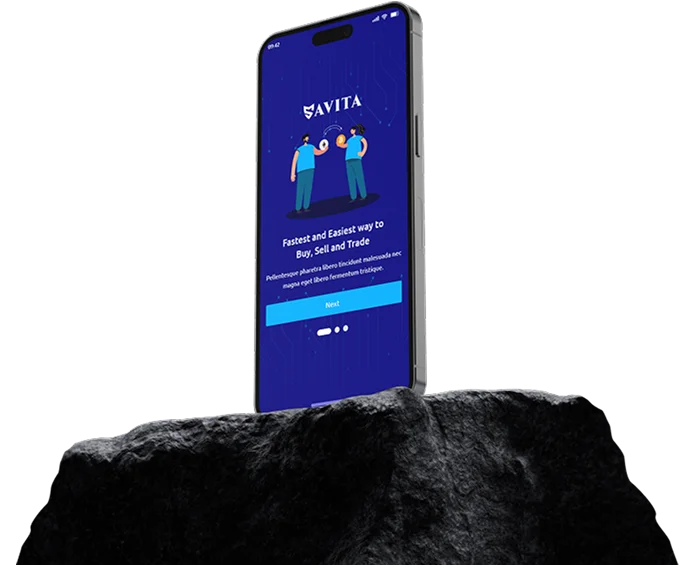

AltCoin Trader is a successful South African-based Centralized Crypto exchange platform that allows users to trade crypto to fiat or vice versa easily.
Read More

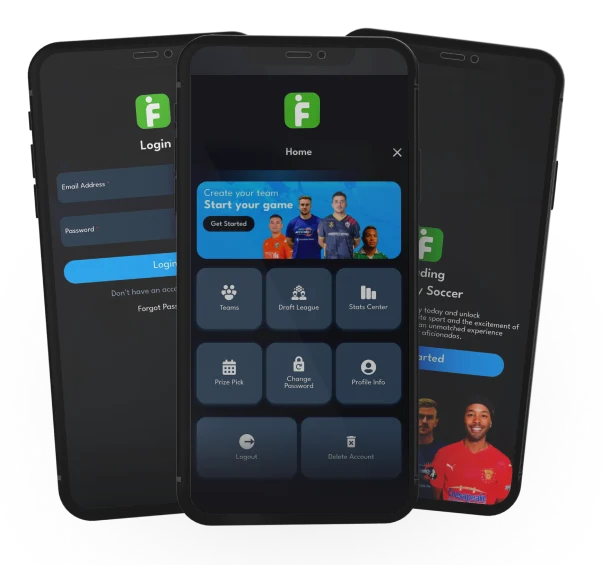
Fantasy Futbol is a next-gen fantasy sports platform where strategy meets skill in a fair and thrilling football experience.
Read More

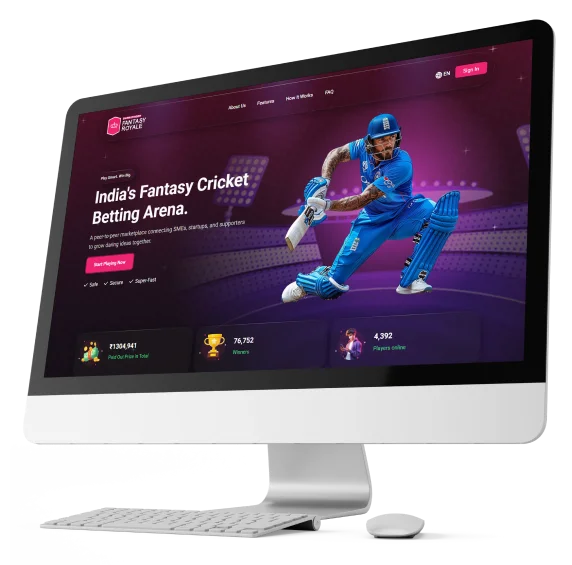
Fantasy Royal is an Indian-based P2P-powered Fantasy Cricket platform with secure, multi-level gameplay for thrilling and rewarding experiences.
Read More
Book your free Hyperledger consultation
Tell us your participants, your data sensitivity, and what you need to integrate with. In 30 minutes, an architect will recommend a project, review your privacy and topology assumptions, and outline a realistic path to production.
- Which Hyperledger project fits your privacy model and your team's skills
- An honest view of feasibility, cost, timeline, and operational commitment
- Clear next steps, whether or not you work with us
Frequently asked questions
Common questions about Hyperledger development, Fabric and Besu, privacy, cost, and operations.
Related blockchain development services
The parent pillar and the pages either side of it
This page goes deep on Fabric and Besu internals. The decision about whether a permissioned network is the right answer at all sits one level up, with the pillar and the advisory page.
enterprise blockchain development company
Whether a permissioned network fits at all, plus governance design and consortium commitment.
technology consulting
Platform selection and feasibility as a paid standalone engagement, deliverables you own.
token development
Permissioned token issuance where a network carries tokenized assets or instruments.
custom blockchain development company
Building a new chain, for the cases where Fabric and Corda genuinely do not fit.
Get your network architecture reviewed before you build it twice. 45 minutes, no obligation.

Reviewed by :
Bal Ganesan
Blockchain Lead at Pixel Web Solutions, with 12 Yrs Experience, specifically 5 Yrs in Hyperledger
Last updated: August 2026
Freshness note: Hyperledger project statuses, versions, and supported features change regularly. Details on this page reflect our understanding at the time of writing.
Ready to build a Hyperledger network that reaches production?
Let's get the topology and privacy design right first, then build something your operations team can actually run. Tell us your participants and data sensitivity, or book a consultation with a Hyperledger architect.
Get in Touch