









ENTERPRISE BLOCKCHAIN DEVELOPMENT SERVICES
Enterprise Blockchain Development Company Building Permissioned Networks That Reach Production
An enterprise blockchain development company builds permissioned, private, and consortium blockchain networks for organisations that need shared, verifiable records across parties. Pixel Web Solutions delivers network design on Hyperledger Fabric, Besu, Corda, and Quorum, smart contract and chaincode development, enterprise system integration, identity and access design, and the governance model that decides whether a network survives.
Supply chain traceability, trade finance, credential verification, and asset tokenization. Deployed on premise, in private cloud, or hybrid, integrated with the systems you already run.
Get your free feasibility assessment
Tell us the process you want to improve and who else is involved. Within 48 hours you get a feasibility view, a platform recommendation, and a realistic estimate.
- Use case validated before platform selection, including when the answer is a database
- Consortium governance designed alongside the technology, since that is what stalls networks
- Source code, network configuration, and infrastructure ownership handed to you
78
Blockchain and enterprise projects delivered
17
Countries served
12 weeks
Typical pilot to production timeline
5
Enterprise blockchain platforms deployed
Most enterprise blockchain projects never leave the pilot. The reasons are consistent.
The technology is rarely why these projects stall. They stall because the use case did not need a blockchain, because the other organisations never joined, because immutability collided with data protection obligations, or because the network sat alongside the systems of record instead of connecting to them. All four are answerable before a line of code is written.
A solution looking for a problem
Blockchain earns its place when multiple parties who do not fully trust each other need shared, verifiable state. Where a single organisation controls the data, a database is faster, cheaper, and easier to run. We test that before recommending a platform, and we will tell you when the answer is no.
Governance nobody designed
A consortium network needs agreed rules for who runs nodes, who can read what, how upgrades are approved, and what happens in a dispute. Networks fail on this far more often than on throughput. We design governance alongside architecture.
Immutability versus data protection
An append-only ledger and a right to erasure are in direct tension. We design data models that keep personal data off-ledger with on-chain proofs, so verifiability and data protection obligations can coexist rather than compete.
A network disconnected from the business
If the ledger does not exchange data with ERP, warehouse, and document systems, staff enter data twice and adoption dies quietly. Integration with systems of record is scoped as core work, not as a later phase.
Our Enterprise Blockchain Development Services
Nine build tracks covering strategy, network, contracts, integration, and the operations that keep it running. Delivered by the same team behind our wider blockchain software development company capability.
An enterprise blockchain development company provides use case validation and feasibility assessment, permissioned network design and deployment, smart contract and chaincode development, enterprise system integration, identity and access management, data privacy architecture, security auditing, consortium governance design, and ongoing node operations and support.
Blockchain Strategy and Use Case Validation
A structured assessment of whether distributed ledger technology fits the problem, which parties need to participate, what data must be shared, and what the alternative looks like. Delivered as a written recommendation, including a recommendation against where that is the honest answer. Delivered as a written recommendation you own, as part of our blockchain consulting services.
Permissioned Network Design and Deployment
Platform selection and network build on Hyperledger Fabric, Hyperledger Besu, R3 Corda, or Quorum, with consensus configuration, channel and privacy design, node topology, certificate authorities, and deployment on premise, private cloud, or hybrid. Fabric and Besu topology, privacy constructs and production operations are covered in depth by our hyperledger blockchain development services.
Smart Contract and Chaincode Development
Business logic implemented as chaincode or smart contracts, with access control, upgrade patterns, deterministic execution, comprehensive test coverage, and independent review before production.
Enterprise System Integration
Connectivity to ERP, warehouse management, document management, CRM, and IoT data sources through middleware, APIs, and event streaming, so the ledger reflects operational reality without duplicate data entry.
Decentralized Identity and Verifiable Credentials
W3C decentralized identifiers and verifiable credentials for participant identity, credential issuance and verification, selective disclosure, and revocation, for networks where proving who someone is matters as much as what they recorded.
Supply Chain Traceability Solutions
Item and batch level provenance, custody transfer events, IoT and sensor data capture, certification and compliance document anchoring, recall support, and consumer or auditor verification interfaces.
Enterprise Tokenization and Digital Asset Infrastructure
Tokenized representation of assets, receivables, carbon credits, or loyalty value, with permissioned transfer, identity binding, and custody appropriate to an institutional context. Tokenized receivables, carbon credits or property interests, built with our crypto token development company practice. Custody appropriate to an institutional context, delivered by our crypto wallet development company team.
Security Audit, Key Management and Compliance
Independent contract and chaincode review, penetration testing, HSM-backed key management, certificate lifecycle management, role and permission design, and audit trail architecture that supports regulatory examination.
Node Operations, Managed Services and Support
Node hosting and monitoring, network upgrades and version management, new participant onboarding, disaster recovery, performance tuning, and feature releases on a fixed monthly retainer.
Not sure whether you need a blockchain at all?
That is the right question, and most vendors will not answer it honestly. Send us the process and the parties involved. We will tell you whether distributed ledger technology adds anything a well-designed shared database would not, and we have told clients no before.
Three ways to work with our enterprise blockchain development team
Pick the engagement that matches how far your organisation has already got.
Feasibility and Proof of Concept
Duration
4 to 8 weeks
Use case validation, platform recommendation, architecture outline, and a working proof of concept demonstrating the core flow with real data shapes.
Best for:
Organisations building an internal business case before committing budget.
Includes:
Feasibility assessment, platform selection, architecture document, working proof of concept, cost model.
Pilot to Production Build
Duration
12 to 24 weeks
A production network with real participants, live integrations to your systems of record, identity and permission design, security review, and operational handover.
Best for:
Organisations with a validated use case and at least one committed partner.
Includes:
Network build, contract development, integrations, identity design, audit, deployment, training.
Managed Network Operations
Duration
Ongoing retainer
We run the network technically: node operations, monitoring, upgrades, new participant onboarding, and disaster recovery, with a named technical lead.
Best for:
Consortium operators without an in-house distributed systems team.
Includes:
Build plus a monthly managed retainer with an agreed SLA.
A proven enterprise blockchain development process, from feasibility to production network
Five stages. The first one can end the engagement, and that is deliberate.
Feasibility and Use Case Validation
We test the problem against the criteria that actually justify a distributed ledger, map the participants, and compare against a conventional alternative. Output: a written recommendation, including a clear no where that is correct.
Platform Selection and Architecture
We select the platform against your privacy, throughput, participant, and deployment requirements, then design network topology, consensus, channel and privacy structure, identity model, and data placement. Output: an architecture document, a governance model draft, and a fixed-price scope.
Build and Integration
Network deployed, chaincode or contracts developed, identity and certificate infrastructure configured, and integrations built to your systems of record and data sources. Output: a working network in a staging environment with live integrations.
Security Review, Performance and UAT
Independent contract review, penetration testing, performance testing against expected transaction volumes and participant counts, disaster recovery rehearsal, and user acceptance testing with real operational staff. Output: a review report, a remediation log, and a release candidate.
Production Launch, Onboarding and Handover
Production deployment, participant onboarding, operations team training, monitoring and alerting, runbook delivery, and source code plus configuration handover. Output: a live network and the operational capability to run it.
Get an honest feasibility answer before you build a business case
A 45-minute review of your use case. We test whether distributed ledger technology genuinely fits, identify which participants must commit for it to work, and flag the governance and data protection questions early. No obligation, no sales script, and no obligation on us to say yes.
- Whether your use case meets the criteria that justify a blockchain over a database
- Which platform fits your privacy, throughput, and deployment requirements
- The governance and data protection questions that decide whether this reaches production
Key Benefits of Choosing Our Enterprise Blockchain Development Services
What organisations get from a team that starts with feasibility rather than with a platform.
An honest feasibility answer
We assess whether the use case justifies a distributed ledger before recommending one, and we have advised organisations to build a shared database instead. That answer costs us a project and saves you a failed programme.
Platform selected against requirements
Fabric, Besu, Corda, and Quorum suit genuinely different privacy, throughput, and participant models. We select against your constraints rather than defaulting to whichever platform we deployed last.
Governance designed with the architecture
Node operation, read permissions, upgrade approval, and dispute handling are agreed alongside the technical design, because consortium networks fail on governance far more often than on engineering.
Data protection and immutability reconciled
Personal data held off-ledger with on-chain proofs, so verifiability coexists with erasure obligations rather than colliding with them.
Integrated with your systems of record
ERP, warehouse, document, and IoT integration is core scope, because a ledger requiring duplicate data entry will not be used.
You own everything
Full source code, network configuration, certificates, and infrastructure transfer to you. No per-node licensing to us, no vendor lock on network growth.
Industries we build enterprise blockchain solutions for
We adapt the same architecture and governance discipline to nine very different sectors.
| Industry | What we build |
|---|---|
| Manufacturing | component provenance, supplier verification, and quality record sharing |
| Logistics and shipping | custody transfer, documentation, and multi-party visibility |
| Banking and trade finance | letters of credit, invoice financing, and document digitisation. Banks running fiat and digital assets on one ledger work with our crypto banking software development team. |
| Insurance | claims data sharing, fraud reduction, and parametric automation |
| Healthcare and pharmaceuticals | drug traceability, credential verification, and consent records |
| Energy and ESG | carbon credit tracking, renewable certificates, and emissions reporting |
| Government and public sector | registries, licensing, and credential issuance |
| Retail and luxury goods | authenticity, anti-counterfeiting, and consumer verification |
| Telecommunications | roaming settlement, identity, and inter-operator reconciliation |
High-value enterprise blockchain use cases we deliver
Multi-party supply chain traceability
Batch and item level provenance across suppliers, manufacturers, and distributors, with IoT capture and auditor access. Why blockchain fits: several organisations need shared records, and none of them should own the database.
Trade finance and document digitisation
Letters of credit, bills of lading, and invoice financing shared between banks, shippers, and traders with verifiable state. Why blockchain fits: the parties are commercial counterparties, and document fraud is the core risk.
Credential and certificate verification
Qualifications, licences, and compliance certificates issued as verifiable credentials that any relying party can check instantly. Why blockchain fits: verification must work without contacting the issuer every time.
Enterprise asset tokenization
Receivables, carbon credits, property interests, or loyalty value represented as permissioned tokens with identity-bound transfer. Regulated asset issuers with real assets and legal structures work with our rwa tokenization company. Why blockchain fits: ownership transfer needs a shared record with an audit trail.
Insurance claims and data sharing
Claims history and fraud signals shared between insurers under agreed rules and privacy controls. Why blockchain fits: competitors need shared data without any one of them controlling it.
ESG and emissions reporting
Carbon and sustainability data captured at source with tamper-evident records for assurance and disclosure. Why blockchain fits: external assurance depends on records nobody in the chain can quietly amend.
Platforms, standards and infrastructure we build on
We build on the platforms your architects and auditors already recognise.
Permissioned platforms:
Consensus mechanisms:
Privacy techniques:
Identity and access:
Integration:
Deployment:
Tools and Technologies We Use
Ledger platforms
Chaincode and contracts
Backend and APIs
Integration
Frontend
Data
Identity
Infrastructure
Security
Enterprise blockchain development driving real organisational outcomes
Typical feasibility assessment to written recommendation
Typical pilot to production timeline
Enterprise blockchain platforms deployed
Figures reflect Pixel Web Solutions delivery data. Individual results depend on participant count, integration complexity, and governance agreement timelines.
Public vs private vs consortium blockchain
A public blockchain is open to anyone, fully decentralised, and transparent by default. A private blockchain is operated by a single organisation with controlled participation. A consortium blockchain is jointly governed by several organisations, each running nodes, which is the model most enterprise use cases actually need because the value comes from parties who do not fully trust each other sharing verifiable state.
| Factor | Public | Private | Consortium |
|---|---|---|---|
| Who participates | Anyone | One organisation | Agreed member organisations |
| Who governs | Distributed, no single party | The operating organisation | Joint member governance |
| Data visibility | Transparent by default | Fully controlled | Controlled per channel or member |
| Throughput | Lower, network-limited | High | High |
| Finality | Probabilistic on most chains | Immediate | Immediate |
| Cost model | Transaction fees | Infrastructure only | Shared infrastructure |
| Typical enterprise fit | Tokenized public assets | Internal audit trails | Multi-party processes |
| Main risk | Privacy and regulatory exposure | Little benefit over a database | Governance and member commitment |
Does your use case actually need a blockchain?
Enterprise blockchain has a poor completion record largely because this test was never applied. Work through it before selecting a platform. If you answer no to the first three, a well-designed shared database will serve you better, and we will say so.
| Test | Question | If no |
|---|---|---|
| Multiple parties | Do several independent organisations need to write to the same records? | A database with API access is simpler |
| Absent trusted intermediary | Is there no party all participants accept as the record keeper? | Let that party host the database |
| Disputed or duplicated records | Do parties currently reconcile conflicting versions of the same data? | The problem is integration, not ledger technology |
| Verifiable history | Does anyone need to prove records were not altered after the fact? | Standard audit logging is sufficient |
| Independent verification | Must external parties verify without trusting your systems? | Reporting and attestation will do |
| Automated multi-party rules | Do agreed rules need to execute without one party controlling them? | Workflow software is cheaper |
| Sustained participation | Will other organisations commit resources long term? | The network will not reach useful scale |
Meeting the first three is the threshold. Meeting five or more usually means a distributed ledger is genuinely the right answer.
We would rather tell you no in week two than deliver a pilot that never reaches production. Our free feasibility review applies this test to your use case in 45 minutes.
Portfolio - Our Work in Action

Coinlocally, the thriving cryptocurrency hub incorporates Centralized, DEXs, and an NFT marketplace – all under one roof!
Read More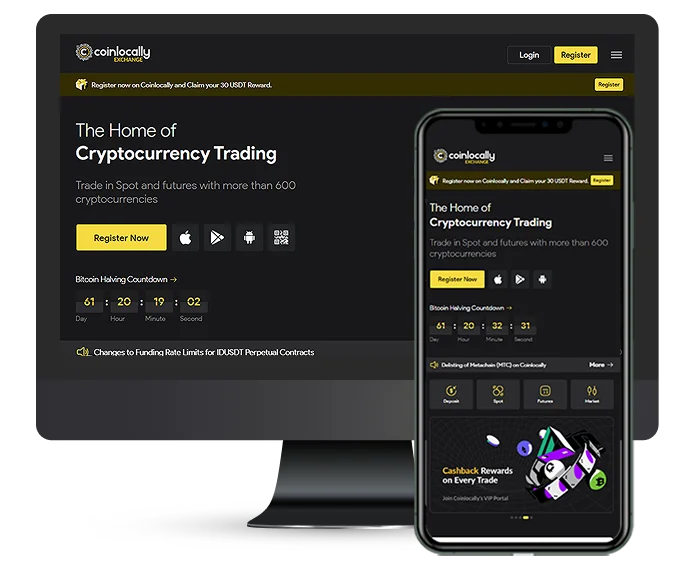

Bankto is a fascinating payment gateway platform where features are tailored brick-by-brick for efficient crypto transactions.
Read More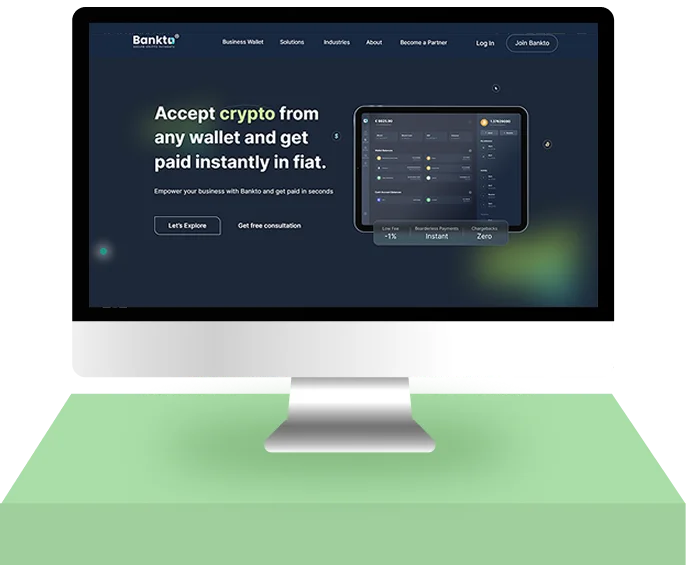

Manilla is a P2P-based exchange where innovative and trusted fintech services are guaranteed.
Read More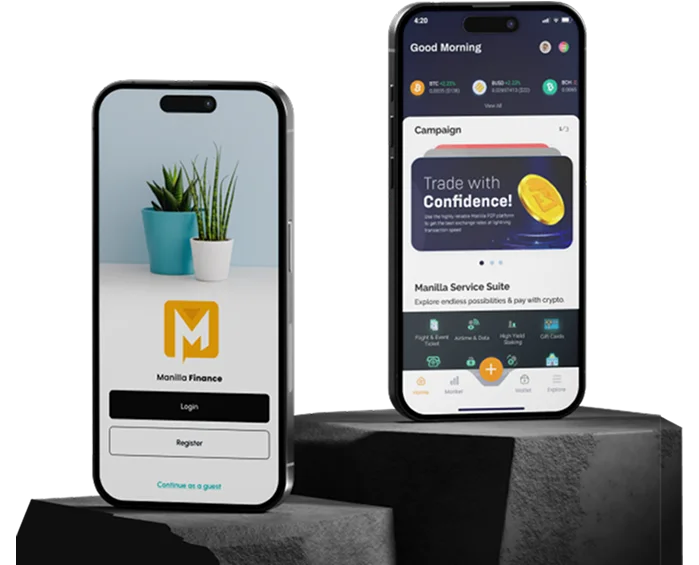

Savita is a global cryptocurrency exchange that emphasizes peer-to-peer order book trading. Being a customer-centric crypto exchange, Savita satisfies more than five thousand traders daily.
Read More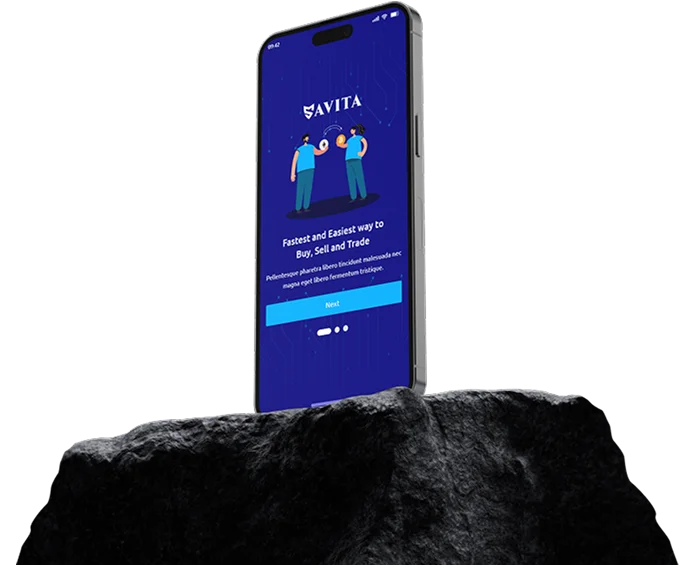

AltCoin Trader is a successful South African-based Centralized Crypto exchange platform that allows users to trade crypto to fiat or vice versa easily.
Read More

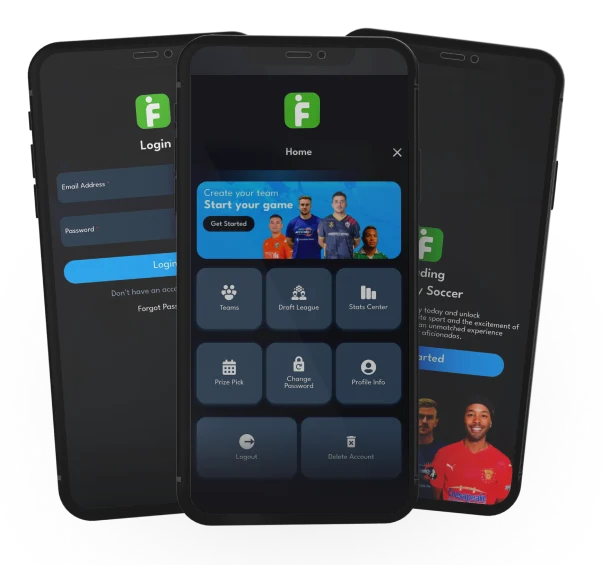
Fantasy Futbol is a next-gen fantasy sports platform where strategy meets skill in a fair and thrilling football experience.
Read More

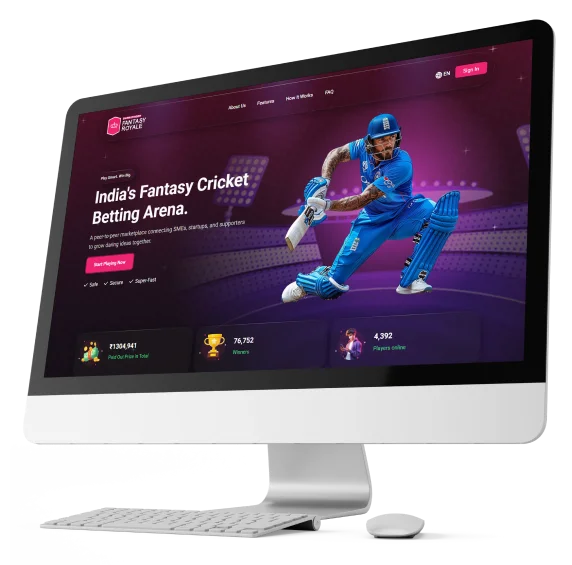
Fantasy Royal is an Indian-based P2P-powered Fantasy Cricket platform with secure, multi-level gameplay for thrilling and rewarding experiences.
Read More
Book your free enterprise blockchain consultation
Tell us the process you want to improve and which organisations are involved. In 30 minutes, a solution architect will test the use case, recommend a platform if one fits, and outline a realistic path from pilot to production.
- An honest view on whether distributed ledger technology fits your use case
- Platform recommendation against your privacy, throughput, and deployment constraints
- Clear next steps, whether or not you work with us
Frequently asked questions
Common questions about enterprise blockchain development, platforms, feasibility, integration, and cost.
Related blockchain development services
Platforms, tokenized assets and the custody underneath them
This pillar owns permissioned and consortium networks. Platform-specific depth, tokenized asset issuance and the custody arrangements institutions ask about each sit on their own page.
Hyperledger blockchain development services
Fabric and Besu depth: topology, privacy constructs, chaincode lifecycle and production operations.
token development
Permissioned tokens for receivables, credits and property interests, with identity-bound transfer.
crypto wallet development company
MPC and multi-signature custody with role-based approvals and full audit trails.
crypto banking software development
Ledger, rails and reporting for institutions running fiat and digital assets together.
Get an honest feasibility answer before you build a business case. 45 minutes, no obligation.

Reviewed by :
Sundarapandy
CTO - Blockchain Operations at Pixel Web Solutions, with 14 Yrs Experience
Last updated: August 2026
Freshness note: Enterprise blockchain platforms, data protection requirements, and integration standards evolve continuously. Details on this page reflect our understanding at the time of writing and are not legal advice.
Ready to find out whether blockchain fits your use case?
Let's test the problem properly first, then build something that reaches production. Tell us the process and the parties involved, or book a consultation with a solution architect.
Get in Touch