Table of Contents
The tokenization market is experiencing remarkable growth, creating significant opportunities for startups and financial innovators. The global tokenization market was valued at USD 2.03 billion in 2021 and is projected to reach USD 13.53 billion by 2030, growing at a CAGR of 24.09% during the forecast period (Grand View Research). This rapid expansion is driving increased interest in real-world asset (RWA) tokenization, including gold-backed digital assets.
By combining the stability of physical gold with the transparency and accessibility of blockchain technology, gold tokenization enables fractional ownership, seamless trading, and global investment access, making it an attractive opportunity for businesses and investors alike.
Investor demand for digital assets is driving businesses to tokenize physical gold through dedicated platforms, creating new revenue opportunities in the Real-World Assets (RWA) market. In this blog, we delve deep into gold tokenization, the benefits of the platform development process, key components, challenges, and the opportunities for a business.
What is Gold Tokenization?
Gold tokenization is the process of converting ownership rights of physical gold into digital tokens on a blockchain network. One gold token will equal a predetermined amount of physical gold stored in insured vaults and independently audited. Investors now have the ability to own, buy, sell, and transfer a fractional ownership of the gold asset on the blockchain network, which allows trading without physical handling. Combining the value of gold with the capabilities of blockchain technology, gold tokenization can offer more transparency, liquidity, accessibility, and security to retail and institutional investors:
- Fractional ownership allows investors to purchase small portions of gold without buying the entire asset.
- Improved liquidity enables tokenized gold to be traded quickly and efficiently on digital platforms.
- Enhanced transparency ensures all transactions and ownership records are securely stored on the blockchain.
- Reduced storage concerns eliminate the need for investors to physically store and safeguard gold.
- Global accessibility allows investors worldwide to buy, sell, and manage gold-backed tokens seamlessly.
How Can Physical Gold Be Tokenized?
Physical gold can be tokenized by converting its ownership rights into blockchain-based digital tokens that represent a specific quantity of the underlying asset. This process involves securely storing the gold in custody vaults, verifying its authenticity through audits, and issuing digital tokens backed by the stored gold, enabling investors to own, trade, and transfer gold in a digital format.
- Gold Acquisition – Physical gold is bought from an approved dealer or a trustworthy supplier.
- Secure storage in a vault – The procured physical gold is stored in insured, approved custody vaults.
- Auditing and verification of assets – Independent auditors are used to inspect the gold amount, purity, and title of ownership.
- Token creation – Digital tokens are then created on a blockchain, which corresponds to a specific quantity of gold.
- Smart contract deployment – Smart contracts are utilized to automate the minting of new tokens, their distribution, transactions, tracking ownership, and redemption.
- Trading and distribution – Gold-backed tokens are then delivered to the investors and are tradable on appropriate exchanges.
By following this process, businesses will be able to effectively turn physical gold into tradable digital assets that are reliable and transparent by providing direct backing with physical gold assets.
What is a Gold Tokenization Platform Development?
A Gold Tokenization Platform Development is the process of creating a blockchain-based solution for businesses that allows them to transform physical gold into digital tokens, as well as control the issuance, ownership, trading, and redemption of those digital gold tokens. It serves as a bridge between physical gold holdings and digital assets. It integrates custody solutions, smart contracts, onboarding, compliance procedures, and transaction handling processes. Investors can safely purchase, sell, transfer, and own partial ownership interests in physical gold. Moreover, it guarantees that each digital token issued is backed by physical gold, which is managed by a professional custody and vault provider.
Have an Idea for a Gold Tokenization Business?
Let’s discuss your requirements and create a customized development roadmap for your Gold Tokenization Platform.
How Does a Gold Tokenization Platform Work?
A Gold Tokenization Platform turns physical gold into digital assets, representing ownership through a blockchain-based token, backed by physically held gold. This entire process is seamless from acquisition and verification to investing and redemptions.
- Physical Gold Deposit – Gold is acquired and stored in physically insured, secured vaults with custodians.
- Gold Verification – Qualified auditors authenticate the quantity, purity, and title ownership of the stored gold.
- Token Issuance – Tokens are created using blockchain technology; each token represents a certain weight of physical gold.
- Investor Onboarding – Investors undergo KYC/AML verification before they are eligible to use and be on the platform.
- Token Purchase & Ownership – Investors acquire gold-backed tokens and obtain fractional ownership over the actual physical gold held in custody.
- Trading & Transfers – Token holders can freely buy, sell, and transfer tokens amongst themselves on the platform or on secondary markets.
- Redemption – Investors are permitted to redeem their tokens for either physical gold or equivalent value, depending on the terms.
By integrating blockchain technology, secure custody, and compliance mechanisms, a Gold Tokenization Platform enables transparent, efficient, and accessible gold investments for a global audience.
Use Cases of Tokenized Gold
Tokenized gold is transforming how individuals and institutions access, trade, and utilize gold assets. For businesses, combining gold stability with blockchain technology creates new investment opportunities and financial applications across various industries.
- Fractionalized Investment in Gold
Fractionalized gold tokens empower investors to buy and hold small units of physical gold as opposed to a whole bar or coin. This reduces the entry barrier for investors looking to add gold to their portfolios, broadening accessibility.
- Digital Trading of Gold
Gold-backed tokens can be easily purchased, sold, and traded on digital platforms with increased speed and efficiency. This offers better liquidity compared to traditional gold ownership methods.
- Preservation of Wealth and Hedging
Gold has been a safe-haven asset historically, and it continues to be employed to preserve value against inflation and economic instability. Tokenized gold allows for a more manageable and readily accessible form of this traditional hedge.
- DeFi and Lending Collateral
Gold-backed tokens serve as a credible form of collateral on DeFi platforms and lending systems, unlocking liquidity from physical gold holdings without the need to liquidate the actual asset.
- Global Payments and Settlements
Tokenized gold has the potential to streamline international payments. Being a globally recognized store of value, businesses and individuals can use gold-backed tokens to settle cross-border transactions with enhanced security and efficiency.
- Institutional Investment Management
Banks, investment funds, and portfolio managers are integrating tokenized gold into a range of diversified investment portfolios. The transparency and programmatic nature of blockchain simplifies the overall asset management and reporting procedures.
As the trend of tokenizing real-world assets gains traction, the usage of tokenized gold continues to expand into a wide variety of applications, offering new possibilities for investors, financial firms, and digital asset platforms.
Top Gold Tokenization Platforms in 2026
The growing adoption of tokenized gold has led to the emergence of several platforms that are redefining how investors access and trade precious metals. By combining the stability of gold with the efficiency of blockchain technology, these platforms have established themselves as leaders in the digital gold investment ecosystem in 2026.
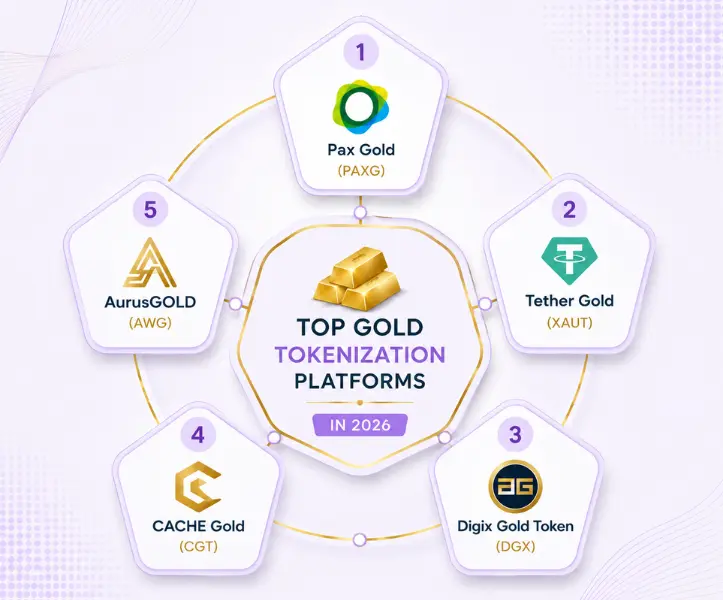
1. Pax Gold (PAXG)
One of the leading gold-backed tokens, where each PAXG token is backed by one fine troy ounce of physical gold stored in professional vaults. It enables investors to own and trade gold digitally while retaining direct ownership rights.
2. Tether Gold (XAUT)
A widely adopted gold-backed token that provides direct exposure to physical gold through blockchain technology. Investors can benefit from gold ownership without the complexities of storage, transportation, and security management.
3. Digix Gold Token (DGX)
A pioneer in the tokenized gold sector, Digix allows investors to own fractional amounts of gold through digital tokens. Each DGX token is backed by one gram of physical gold stored in secure vaults.
4. CACHE Gold (CGT)
CACHE Gold offers blockchain-based ownership of allocated physical gold through CGT tokens. Its transparent auditing mechanisms and secure custody solutions have made it a trusted platform for digital gold investments.
5. AurusGOLD (AWG)
AurusGOLD bridges traditional gold investments and digital assets by issuing tokens backed by audited gold reserves. The platform provides investors with secure, accessible, and blockchain-enabled gold ownership.
The above examples highlight the increasing acceptance of gold tokenization as it allows a seamless integration of physical gold with digital asset markets and hence opens up new avenues for investors to acquire gold assets in a secure manner.
Ready to Build the Next Leading Gold Tokenization Platform?
Launch your own gold-backed token ecosystem with Pixel Web Solutions and capitalize on the growing demand for tokenized precious metal investments.
How to Develop a Gold Tokenization Platform?
Creating a Gold Tokenization Platform brings together physical gold and blockchain technology to build an investment environment that is safe and transparent. This process needs careful strategizing, legal and regulatory adherence, sophisticated technological infrastructure, and proper asset management.
- Planning & Regulatory Assessment
It is first necessary to outline your business approach, your intended audience, how the token should be formed, and sources of income. Simultaneously, you must check legal and regulatory conditions for possessing gold, digital assets, the regulations concerning securities, and the KYC/AML compliance applicable in the territories you wish to target.
- Gold Procurement and Custody Setup
You must buy physical gold from reliable dealers and store it in a safe, insured vault run by an approved custodian. Obtain agreement with auditors to perform regular verifications of the gold held in the vaults for quantity, quality, and ownership of the reserves.
- Token Design and Smart Contracts
You will need to decide how each token will correspond to a specified amount of gold and what redemption procedures are to be implemented. Develop the smart contracts in charge of token issue, transfer of ownership, regulatory checkups, and the redemption process.
- Platform Development & Integrations
The basic structure of the platform, including dashboards for investors, the wallet connection, and managing the token system, payment options, and administrative tools, needs to be set up. Connect to the blockchain network and security protocols so that the platform works seamlessly.
- Testing, Audits, and Compliance Verification
Ensure that all the platform’s functions, transactional flows, and smart contracts are extensively tested. Conduct external security audits and verify all legal compliance aspects so the platform conforms to standard regulations.
- Launch and Ongoing Management
Deploy the platform, integrate investors, and proceed with issuing the tokens. Keep monitoring the platform’s operation, the custody of the gold, perform regular checks and updates, and maintain the required legal compliance, following new laws and standards as they change.
By following these development stages, businesses can launch a secure, compliant, and scalable Gold Tokenization Platform that enables transparent gold ownership, efficient trading, and broader investor participation.
Methods to Create a Gold Tokenization Platform
To create a Gold Tokenization Platform, you have several options: either by having an in-house development team, by collaborating with blockchain consultants, by using open-source frameworks, or by hiring an expert RWA tokenization development company.
The most effective and economical option is usually hiring an experienced development company since it offers expertise and knowledge about the industry and end-to-end development support. Pixel Web Solutions is one of the most trusted RWA tokenization platform development companies in the market. We help businesses digitize their physical assets into secure tokens on the blockchain.
Custom Gold Tokenization Platform Development
Our custom development is aligned with the particular business needs of your company, regulatory framework, and workflows. With smart contract development and custody solutions to investor management and regulatory functions, we design and develop scalable platforms to meet the future goals of your business.
White Label Gold Tokenization Platform Software
Our white-label Gold Tokenisation Platform Software offers a ready-to-launch solution with essential features, including token issuance, investor onboarding, wallet integration, compliance management, and trading capabilities. This approach significantly reduces development time and costs while enabling businesses to enter the market quickly under their own brand identity.
Whether you’re looking to build a fully customized solution or launch rapidly with a white-label platform, Pixel Web Solutions provides the expertise, technology, and support needed to establish a successful Gold Tokenization Platform in the growing RWA ecosystem.
Essential Components of a Gold Tokenization Platform
A Gold Tokenization Platform needs key components for secure asset management, transparent ownership tracking, seamless transactions, and regulatory compliance. These elements connect physical gold reserves to blockchain-based tokens, ensuring a reliable experience for businesses and investors.
Physical Gold Reserve Management
It involves keeping records of the quantity and value of the gold reserves that back the tokens. It also helps ensure that each circulating token is indeed backed by a verified amount of physically held gold.
Secure Custody and Vault Infrastructure
A secure custody solution stores the actual physical gold reserves, insured and legally compliant, within a regulated vault. Such a system protects the valuable gold reserves from risks such as theft, unauthorized access, or natural disasters and enhances investor trust.
Asset Verification and Auditing System
This mechanism provides for regular verification of the quantity and purity of stored gold. Audits are conducted periodically by external parties, reinforcing the credibility that tokens are indeed fully backed by tangible gold assets.
Investor Dashboard
The investor dashboard is an online platform that provides users with access to their token holdings, transaction history, investment performance, and account management information. This module offers convenience and a comprehensive view of their holdings.
Token Management Module
Token Management refers to the system for issuance, transfer, redemption, and burning of the tokens. Smart contracts automatically perform these actions once initial configurations are completed, ensuring the token’s ledger is always updated and reflective of the current ownership.
Payment Gateway Integration
It enables investors to purchase gold-backed tokens using fiat currencies, cryptocurrencies, or other supported payment methods. It streamlines transactions and improves accessibility for a wider audience.
Compliance Management System
Integrates various elements of KYC, AML, transaction monitoring, and regulatory reporting to ensure the platform meets all relevant legal and regulatory standards. This helps mitigate risk, avoid legal trouble, and prevent illicit activities.
Business Benefits of Creating a Gold Tokenization Platform
The increasing demand for digital assets and tokenized real-world assets offers new business opportunities for startups, financial institutions, and asset managers with Gold Tokenization Platforms. Leveraging the inherent value of physical gold through blockchain technology provides businesses with new revenue streams and a larger pool of investors to tap into.
Creates New Revenue Streams
Revenue opportunities include token issuance fees, transaction charges, custody services, redemption fees, and platform subscriptions. These multiple sources of income increase business sustainability and growth.
Expands Global Investor Reach
A Gold Tokenization Platform can draw a diverse investor base from around the world, beyond the usual pool available through traditional gold markets. Higher investment rates are promoted by better accessibility.
Improves Asset Liquidity
Tokenization of gold converts typically illiquid gold assets into highly transferable digital tokens. A larger investor base will be attracted by the high liquidity and facilitate the smooth transfer of assets.
Enables Fractional Investment Opportunities
By dividing gold into smaller digital units, businesses can cater to retail investors with varying investment capacities. This democratized access significantly increases the potential customer base.
Enhances Transparency and Investor Trust
The ownership history stored on the blockchain and the auditing of the gold reserves provide investors with better clarity about gold holdings and transactions, enhancing platform reliability and trustworthiness.
Secures a Competitive Advantage in the RWA Space
Launching a Gold Tokenization Platform will position businesses at the cutting edge of the rapidly expanding market for real-world asset tokenization. Being an early mover in this area helps establish a market position, attracting partnerships.
A Gold Tokenization Platform is not just a technological leap, but a new business opportunity. Increased accessibility, liquidity, transparency, and the potential for generating more revenue create room for businesses to take advantage of the booming gold tokenization trend and create a position in the digital asset domain.
Cost of Gold Tokenization Platform Development
The cost of creating a Gold Tokenization Platform depends on several factors. First, the platform’s complexity affects the price. Next, the amount of custom features you need can also change costs. The choice of blockchain network matters as well.
You’ll need to consider developing smart contracts and their security features, too. Additionally, integrating wallets and payment gateways is necessary. Ensuring you meet regulatory requirements is important, and you may also need third-party services like storage and auditing.
Another significant factor influencing the investment is whether one requires a fully custom solution or a white-label approach. As every project has distinct business needs and technical specifications, the overall expenditure may also vary to a large extent.
Looking for an estimated cost to develop your Gold Tokenization Platform?
Schedule a free consultation with Pixel Web Solutions and receive a customized cost estimate based on your platform requirements, features, and business objectives.
Technology Stack Used in Gold Tokenization Platform Development
To develop a Gold Tokenization Platform, it is important to have a strong technology setup. This will ensure that the process of tokenizing assets, handling transactions, and meeting regulatory requirements works well. The platform should operate smoothly and be able to grow as needed.
- Blockchain Network – Blockchain underpins the platform, recording token ownership and transactions on an immutable ledger. Common options include Ethereum, Polygon, and BNB Chain.
- Smart Contract Frameworks – Smart contracts automate token issuance and transactions. Frameworks like Solidity and OpenZeppelin are popular for developing secure contracts.
- Frontend Technologies – It creates a user-friendly interface. Frameworks like React.js and Angular help build responsive dashboards.
- Backend Technologies – Backend systems manage business logic and user authentication. Node.js, Python, and Java are commonly used for reliable performance.
- Database and Cloud Infrastructure – Databases store user and transaction data, while cloud services ensure scalability. PostgreSQL, AWS, and Google Cloud are frequently used.
- Security and Compliance Tools – Security tools protect against cyber threats and ensure compliance. Features like multi-factor authentication and smart contract auditing help safeguard user data.
A solid technology stack is crucial for building a robust, scalable, and future-proof Gold Tokenization Platform. With the right selection and implementation, organizations can provide a smooth digital gold investment journey and ensure transparency, compliance, and efficiency.
Why Choose Pixel Web Solutions for Gold Tokenization Platform Development?
As a leading blockchain and RWA tokenization platform development company, Pixel Web Solutions has considerable experience building robust, secure, and feature-rich asset tokenization platforms. We combine deep blockchain expertise with industry best practices to help businesses transform physical gold into compliant digital assets. From strategic guidance and smart contract development to platform deployment and ongoing assistance, our team provides a comprehensive solution to Gold Tokenization Platform Development, custom-built around your specific business needs and the marketplace you operate in.
- End-to-End Development Expertise
- Custom and White-Label Solutions
- Advanced Blockchain Integration
- Security-Focused Development.
- Regulatory and Compliance Support
- Dedicated Technical Support
Frequently Asked Questions (FAQs)
- How long does it take to develop a Gold Tokenization Platform?
The development timeline for a Gold Tokenization Platform typically ranges from 8 to 24 weeks, depending upon factors like the level of complexity, blockchain network used, smart contract functionality, compliance requirements, custom features needed, etc.
- Is regulatory compliance required for launching a Gold Tokenization Platform?
Yes. Regulatory compliance is essential when launching a Gold Tokenization Platform. The businesses have to comply with regulations for asset tokenization, KYC/AML compliance, securities laws, regulations regarding digital assets as per different jurisdictions, regulations governing precious metals, and others.
- Can tokenized gold be redeemed for physical gold?
Yes. Depending on the business model of the platform, the investors are allowed to redeem their digital gold tokens for physical gold in the vault, and the redemption criteria could include a minimum redemption quantity as well as fees involved.
- Which is the best blockchain for Gold Tokenization Platform Development?
The choice of blockchain network can be tailored according to business requirements, scalability, transaction fee structure, security concerns, etc. Popular choices include Ethereum, Polygon, BNB Chain, Avalanche, and various enterprise-level blockchain platforms suitable for asset tokenization.
- Is it possible to trade tokenized gold on secondary markets?
Yes. Gold tokens can be traded on compatible exchanges or marketplaces to enable buyers and sellers to transact, which increases the liquidity and provides a more favorable investing experience.