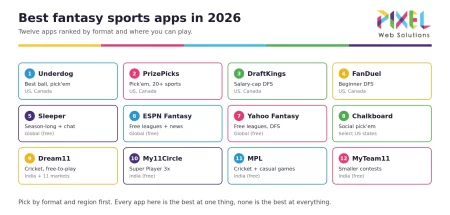
The best fantasy sports business ideas for 2026 are sport-specific fantasy apps (football, cricket, basketball), daily and season-long platforms, draft tools and athlete trading apps, plus five newer models: free-to-play fantasy for India, women's sports fantasy, sports prediction markets, AI fantasy assistants and B2B white-label platforms. Which one fits you depends less on the sport than on the market you launch in, because paid contests are banned in India and licensed state by state in the US.
Have you ever dreamed of turning your passion for sports into a business?
The audience is there. About 57 million people in the US and Canada played fantasy sports in the previous 12 months, and 84 million adults played fantasy or bet on sports, according to 2025 research from the Fantasy Sports & Gaming Association. Younger fans start early too: season-long players aged 13 to 20 began at an average age of 14. Whether it is cricket, football or basketball, fans are ready to draft their dream teams and compete.
But how can you carve out your niche in this competitive market? In this guide, we cover the top fantasy sports business ideas for 2026, score each one on legal fit, cost and revenue, and show the maths so you can pick the right one for your budget.
Key Takeaways
- Fifteen ideas, one filter: start by choosing your market and money model, because India bans paid fantasy since 1 May 2026, while most US states license it.
- Free-to-play is now a business model, not a demo: Dream11 switched to free-to-play with ads in August 2025, and ad-funded fantasy is the main route in India.
- Budgets scale with compliance: a single-sport fantasy MVP costs roughly $20,000 to $40,000 at offshore rates, while betting-style products need licences and far larger builds.
- Underserved audiences are the opening: 74% of fantasy players are male, and the WNBA is already the top women's league for fantasy, which points to women's sports and niche leagues.
- New formats are arriving: FanDuel and DraftKings launched prediction market apps in late 2025, showing how fantasy, betting and event trading are converging.
Top Fantasy Sports Business Ideas for 2026
The fantasy sports industry in 2026 offers real opportunities for entrepreneurs who match the idea to the market. Whether you focus on popular sports or niche formats, each business idea below targets a specific audience and revenue model. Here are the ten classic fantasy sports app ideas, followed by five newer ideas for 2026.
- Fantasy Football App
- Fantasy Cricket App
- Fantasy Basketball App
- Sportsbook Software
- Sports Betting Software
- Fantasy Sports Stock Trading App
- Crypto Sports Betting Software
- Sports Draft Software
- Daily Fantasy Sports App
- Season-long Fantasy Sports App
Let us dig deeper.
1. Fantasy Football App: Kickstarting Success with Football's Global Appeal
Fantasy football apps let fans create virtual teams of real players. Users compete in leagues and earn points based on player performance in actual matches, which rewards strategic thinking and builds community. Whether you mean American football in the US or soccer worldwide, the audience is vast.
Business owners can tap into football's passionate fan base and drive year-round engagement through international leagues and tournaments. The social and competitive side of fantasy football builds strong communities and boosts retention.
Revenue Streams:
- In-app purchases (boosters, power-ups and analysis tools).
- Subscription plans for premium features.
- Advertisements and sponsorships.
- Entry fees for exclusive leagues or contests, where paid contests are legal.
Key Features:
- Real-time match updates and player stats.
- League management and customizable scoring.
- Gamification elements like leaderboards and badges.
Examples: ESPN Fantasy Football, DraftKings.
Create engaging platforms for football enthusiasts to build virtual teams, compete and stay connected to their favorite sport.
Fantasy Football App Development: Create a Fantasy Football App to Engage with Fans
2. Fantasy Cricket App: Breaking into the Cricket-Crazed Market
Fantasy cricket apps serve one of the largest sports communities in the world, especially in India, Australia and the UK. They let fans draft teams across formats, from international tournaments to domestic leagues like the IPL.
The business model changed in 2026. In India, the Online Gaming Act 2025 has banned paid fantasy contests since 1 May 2026, so a fantasy cricket app for Indian users must be free-to-play and earn from ads, sponsorships and non-cash in-app purchases. Paid contests remain possible in markets that license them. Seasonal tournaments, regional languages and deep match coverage still drive engagement either way.
Revenue Streams:
- Premium memberships for exclusive analytics.
- Sponsored contests and ads.
- Transaction fees from league prize pools, in markets where paid contests are legal.
Key Features:
- Multi-language support for diverse audiences.
- IPL-specific features and seasonal rewards.
- Live match tracking and in-depth analytics.
Examples: Dream11 (now free-to-play), MyTeam11.
Tap into cricket's massive fan base with platforms tailored to the fans' passion and strategic gameplay. For a model-by-model breakdown, see our guide to building an app like Dream11.
Fantasy Cricket App Development: To Rule the Fantasy Cricket Realm
3. Fantasy Basketball App: Dunking into the Basketball Fantasy Market
Fantasy basketball apps engage basketball fans, especially during the NBA season. Users draft and manage teams, follow injuries and trades and react to a fast-paced schedule.
Launching a fantasy basketball app lets business owners capture loyal fans across North America, Europe and beyond. Activity stays high through the season and peaks in the playoffs, creating steady monetization opportunities. There is also room in women's basketball: FSGA research found the WNBA is the top women's league for fantasy sports and betting.
Revenue Streams:
- Subscription models for advanced features.
- In-app purchases like player trade boosts.
- Advertisements and partnerships with leagues.
Key Features:
- Dynamic drafts and injury updates.
- AR integrations for immersive experiences.
- Advanced analytics for strategic insights.
Examples: Yahoo Fantasy Basketball, FanDuel.
Enter the world of basketball fandom with platforms that let users draft teams, predict outcomes and engage deeply with the sport.
4. Sportsbook Software: Seizing the Future of Sports Entertainment
Sportsbook software combines traditional sports betting with fantasy-style features in one platform. It appeals to users who enjoy betting on live games while also playing in fantasy leagues.
This is a regulated gambling business, not an app idea you can launch on a weekend. You need a sportsbook licence in each jurisdiction, odds and risk management, responsible gambling tools, and payment and identity checks. In return, it is one of the largest revenue pools in sports.
Revenue Streams:
- Betting margin and commissions.
- Advertising and sponsorships.
- Subscriptions for premium analytics.
Key Features:
- Multi-sport betting with real-time odds.
- Secure payment gateways and customizable dashboards.
- AI-driven insights to assist user decisions, with responsible gambling limits.
Examples: Bet365, William Hill.
Combine fantasy sports and live betting to deliver a comprehensive platform for licensed markets.
Here is your Fantasy Sports App Development Guide to Build any Fantasy Sports Software
5. Sports Betting Software: Innovating the Betting Space for Maximum Engagement
Sports betting software gives users a dedicated platform to place wagers on sports events, with live betting during matches. By focusing only on betting, these platforms deliver streamlined functionality for bettors.
Demand peaks around major events, but so do compliance demands. Every market needs a licence, geolocation and responsible gambling tools, so plan the licensing route before you plan the features.
Revenue Streams:
- Betting margin on wagers placed.
- Premium memberships for advanced odds tools.
- Advertisement revenue.
Key Features:
- Live betting and secure, audited transaction systems.
- Odds comparison tools.
- Social betting features to encourage competition.
Examples: FanDuel Sportsbook, BetMGM.
Develop sports betting platforms that meet the demand for secure, interactive and licensed wagering.
6. Fantasy Sports Stock Trading App: Pioneering the Athlete Trading Revolution
Fantasy sports stock trading apps let users buy, sell and trade virtual shares of athletes, mirroring stock market dynamics. Prices move with player performance and demand, combining financial strategy with sports fandom.
This format appeals to both sports fans and traders. Be careful with the design, though: if users trade real money for "shares" whose value they expect to rise, regulators may view the product as securities or event contracts. A points-based or free-to-play version avoids most of that risk.
Revenue Streams:
- Trading fees and commissions.
- Subscriptions for advanced analytics tools.
- Ads and sponsorships.
Key Features:
- Performance-based valuations.
- AI-driven market insights.
- Educational tools for beginners.
Examples: PredictionStrike.
Offer a fusion of fantasy sports and financial strategy by creating platforms where fans trade virtual shares of athletes.
7. Crypto Sports Betting Software: Blockchain-Powered Betting
Crypto sports betting software adds cryptocurrencies and blockchain to the betting ecosystem. It offers faster, more transparent transactions and on-chain records of bets and payouts.
The regulatory picture is tighter than many guides admit. Australia has banned digital currency deposits for licensed wagering operators under the Interactive Gambling Act 2001 since June 2024, and most US states do not allow operators to take crypto directly. Our guide to crypto adoption in fantasy sports explains where crypto still fits.
Revenue Streams:
- Betting margin and transaction fees.
- Premium features for advanced tools.
- Affiliate partnerships with crypto wallets.
Key Features:
- Support for multiple cryptocurrencies and stablecoins.
- Smart contract-enabled bet settlement.
- Secure wallets with KYC where the licence requires it.
Examples: Cloudbet, Sportsbet.io (both operate under offshore licences and are not available in many regulated markets).
Use blockchain to create transparent, secure betting platforms, and match the payment model to each market's law.
8. Sports Draft Software: Empowering Users to Build Winning Teams
Sports draft software focuses on the drafting side of fantasy sports, with real-time auctions, snake drafts and salary caps. It suits leagues with complex rules and players who enjoy deep team-building strategy.
Creating sports draft software lets entrepreneurs build a dedicated base of advanced fantasy players. Specialized tools and competitive features drive strong retention in this niche.
Revenue Streams:
- Fees for premium draft tools.
- Subscription plans for enhanced analytics.
- Ads and sponsorships.
Key Features:
- Real-time auction systems and salary caps.
- AI-based draft suggestions.
- Integration with season-long and daily formats.
Examples: Sleeper, CBS Sports Fantasy.
Focus on the draft experience with advanced tools that appeal to competitive fantasy players.
9. Daily Fantasy Sports App: Capturing the Thrill of Instant Competition
Daily fantasy sports (DFS) apps offer short contests that last a day or a week. They suit fans who want the thrill of fantasy sports without a season-long commitment.
A DFS app attracts a broad audience with low barriers and fast, frequent play. Paid DFS is regulated state by state in the US: DraftKings, for example, reports its DFS product in 44 states plus Washington, D.C., and some states ban certain formats such as player pick'em.
Revenue Streams:
- Entry fees for contests (rake), in licensed markets.
- In-app purchases and ad revenue.
- Sponsored daily challenges.
Key Features:
- Quick contest setup and instant results.
- User-friendly interfaces with gamification.
- Multi-sport coverage, geolocation and age checks.
Examples: DraftKings, FanDuel.
Build platforms for short fantasy contests, catering to fans looking for fast-paced and rewarding gameplay.
Get a customized quote for your Fantasy Sports App Development Cost
10. Season-long Fantasy Sports App: Creating Long-term Engagement for Fans
Season-long fantasy sports apps offer the traditional experience: leagues that run across an entire season, with drafts, trades and weekly matchups.
Developing a season-long app helps business owners build a loyal community of deeply invested users. Because most season-long leagues are free to join, the model works in almost every market and earns from subscriptions, ads and premium tools.
Revenue Streams:
- Premium league customization tools.
- Ads and sponsorships.
- Paid trade analyzers and recaps.
Key Features:
- Season recaps and injury management tools.
- Community features like chat and private leagues.
- Trade analyzers and analytics.
Examples: NFL Fantasy, Yahoo Fantasy Sports.
Design traditional fantasy platforms that foster deep engagement and community-driven experiences.
5 New Fantasy Sports Business Ideas for 2026
The ten ideas above are proven. The five below respond to what changed in 2025 and 2026.
11. Free-to-Play Fantasy App for India
When India's Online Gaming Act took effect, paid fantasy contests ended overnight. Dream11 stopped all paid contests on 22 August 2025 and moved to free-to-play. That leaves a large cricket audience used to fantasy contests, now served by ad and sponsor-funded apps. Build without a cash wallet, fund prizes through sponsors and earn from ads, brand contests and non-cash in-app purchases. Our guide to fantasy sports regulations explains what the law allows.
12. Women's Sports Fantasy Platform
The same FSGA research found fantasy players are 74% male with an average age of 42.4, and that the WNBA leads women's leagues for fantasy. A fantasy app built around the WNBA, NWSL, women's cricket and women's tennis targets both an underserved league set and an underserved audience.
13. Sports Prediction Market App
Fantasy, betting and event trading are converging. FanDuel launched FanDuel Predicts in five states with CME Group in December 2025, and DraftKings launched its own predictions app the same month. In the US these products run through CFTC-registered exchanges, while elsewhere the rules differ. If you want to build in this space, see Pixel Web Solutions' prediction market platform development, which starts from $7,000.
14. AI Fantasy Assistant or Analytics App
Players already pay for projections, lineup optimizers and injury alerts. An AI assistant that explains start-or-sit decisions, simulates trades and summarizes news can run as a subscription product on top of existing fantasy platforms, with no gaming licence needed in most markets.
15. White-Label Fantasy Platform for Brands and Media
Leagues, broadcasters, newspapers and consumer brands want fantasy games to keep fans engaged. A B2B white-label platform sells the same engine to many clients for setup fees plus a monthly licence, which smooths out the seasonality of a consumer app.
Fantasy Sports Business Idea Scorecard: Legal Fit, Cost and Revenue
This is the comparison most idea lists skip. The cost bands are industry estimates at offshore rates of about $25 per hour, built from hours: a single-sport fantasy MVP needs roughly 800 to 1,600 hours ($20,000 to $40,000), a mid-range app 1,600 to 3,200 hours ($40,000 to $80,000), and a betting-grade platform 4,000 to 8,000 hours or more ($100,000 to $200,000+) before licences. At $50 per hour, double each figure.
| Business idea | Licence needed for paid play | Works in India in 2026 | Estimated build band | Main revenue |
|---|---|---|---|---|
| Fantasy football, cricket or basketball app | Yes in most paid markets | Free-to-play only | $20,000 to $80,000 | Ads, subscriptions, entry fees where legal |
| Sportsbook or sports betting software | Yes, in every market | No | $100,000 to $200,000+ | Betting margin |
| Athlete stock trading app | Possibly securities or event contract rules | Points-based only | $40,000 to $80,000 | Trading fees, subscriptions |
| Crypto sports betting software | Yes, plus crypto rules | No | $100,000 to $200,000+ | Betting margin |
| Draft software | Usually no | Yes | $20,000 to $40,000 | Subscriptions, tools |
| Daily fantasy sports app | Yes, state by state in the US | Free-to-play only | $40,000 to $80,000 | Rake, ads |
| Season-long app | Usually no if free to join | Yes | $40,000 to $80,000 | Ads, premium tools |
| Free-to-play India app | No gaming licence; registration may apply | Yes | $20,000 to $40,000 | Ads, sponsors |
| Women's sports fantasy | Same as fantasy app | Free-to-play only | $20,000 to $40,000 | Sponsors, subscriptions |
| Sports prediction market | Yes (CFTC route in the US) | No | From $7,000 (Pixel), custom $25,000 to $150,000+ | Trading fees |
| AI fantasy assistant | Usually no | Yes | $20,000 to $40,000 | Subscriptions |
| White-label platform for brands | Depends on each client's use | Yes, free-to-play | $40,000 to $80,000 | Setup fees, monthly licences |
Worked Example: Two Ways to Make $6,000
Here is how the two main revenue models compare, using stated assumptions you can change.
- Paid DFS rake (licensed US state): 10,000 contest entries a week × $5 average entry × 12% rake = $6,000 a week.
- Free-to-play ads (India or any market): 50,000 monthly active users × 20 sessions × 3 ad impressions = 3,000,000 impressions. At an assumed $2 per 1,000 impressions, that is $6,000 a month.
Same number, very different business: the paid model earns roughly four times more per month from a smaller audience but needs licences, KYC and geolocation. The free model needs scale and retention. Our guide on how to make money with a fantasy sports app covers more revenue streams.
Frequently Asked Questions
Is a fantasy sports business still profitable in 2026?
Yes, if the model fits the market. Paid contests remain profitable in licensed US states, while India and other restricted markets need ad, sponsorship and subscription models.
How much does it cost to start a fantasy sports business?
A single-sport fantasy MVP typically costs $20,000 to $40,000 at offshore rates, and an advanced multi-sport app $80,000 to $200,000 or more. Add licences, data feeds and marketing for paid-contest markets.
Can I start a fantasy sports app in India in 2026?
Yes, as a free-to-play app. Paid contests with cash prizes have been banned since 1 May 2026.
Which fantasy sport is best for a new business?
Pick the sport your target market loves most and where competition is thinnest: cricket in South Asia, football in Europe and the US, and niche or women's leagues where big apps offer little.
Do I need a licence to start a fantasy sports business?
For paid contests, usually yes, depending on the state or country. Free-to-play apps and analytics tools usually need no gaming licence.
Conclusion
The fantasy sports business offers real potential in 2026 for entrepreneurs who match the idea to the market. Startups can choose a model that fits their budget, their audience and the law.
Each idea presents its own way to engage users and drive revenue, from classic football and cricket apps to newer formats like free-to-play cricket, women's sports fantasy and prediction markets. The scorecard above shows that the winning fantasy sports business ideas are the ones that respect local rules from day one.
Now is a good time to start building. Whether you target mainstream sports or untapped niches, professional guidance makes a difference. Pixel Web Solutions, a leading fantasy sports app development company, can help you turn any of these fantasy sports business ideas into a compliant, scalable product. To discuss your idea, contact the Pixel Web Solutions team.