The must-have NFT marketplace features in 2026 are a clear storefront, advanced search and filters, multiple payment options including cards, minting and listing tools, bidding and auctions, cross-platform access, royalty management, strong security, audited smart contracts and multi-chain support. Add-ons such as embedded wallets, trader tools, analytics and fraud protection are what separate a marketplace that grows from one that closes.
NFT marketplaces are the online spaces where art, technology, and commerce meet. The NFT marketplace features in a platform have not only helped make NFTs accessible to everyone but also opened up new revenue streams and business models. By letting artists and creators sell their digital works directly, and earn royalties on resales where the platform honours them, NFT marketplaces give businesses room for new monetization strategies.
Features matter more in 2026 than ever, because the market is smaller and more competitive. CryptoSlam recorded about $40.9 million in NFT sales in the week to 3 October 2026, and several well-known marketplaces have closed or narrowed their focus. NFT marketplaces like NBA Top Shot win with licensed content and card payments, while Courtyard leads sales with tokenized physical collectibles that can be redeemed for the real item. These NFT marketplace features are not just extras; they turn visitors into long-term users.
Understanding what makes top NFT marketplaces stand out helps businesses implement the features that attract and retain users. Besides that, let’s get this clear…
Key Takeaways
- 10 core features are non-negotiable: storefront, search, payments, minting and listing, bidding, cross-platform access, royalties, security, smart contracts and multi-chain support.
- Onboarding is the 2026 battleground: embedded wallets, passkey login and card payments let first-time buyers purchase without managing a seed phrase.
- Royalty features need honesty: EIP-2981 declares a royalty, but enforcement depends on the marketplace or contract design.
- Features follow your niche: a gaming marketplace, an art gallery and a phygital collectibles platform need different feature sets.
- Plan features by build stage: an MVP needs the core 10; trader tools, analytics and cross-chain checkout can follow. Pixel Web Solutions builds NFT marketplaces for $45,000 to $150,000.
Why Features Matter in an NFT Marketplace?
-
Features are the silent architects of any NFT marketplace. They are the core components that determine your success in the NFT market. A well-rounded set of NFT marketplace features makes an NFT platform intuitive, functional, and future-proof.
-
These NFT marketplace features bridge the gap between user expectations and platform performance, ensuring smooth experiences for creators, buyers, and collectors.
-
With the essential features in place, you can attract and retain users with greater convenience and a better user experience. Take, for example, advanced search filters in an OpenSea clone script: they let users move through large collections quickly, which reduces the time and effort needed to find the right NFT.
-
Trust is a feature too. Marketplaces build credibility through audited contracts, clear transaction signing, verified collections and fast action against stolen or fake items.
-
Moreover, NFT marketplace features are not just about user experience. By addressing user needs, improving security, and enabling future-ready operations, the right features can lift an NFT marketplace from functional to exceptional.
-
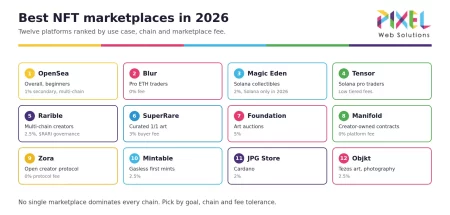
Features alone do not guarantee survival, though. X2Y2 and other marketplaces shut down as volumes fell, Kraken wound down its NFT marketplace, Foundation closed in April 2026, and Magic Eden left Ethereum and Bitcoin NFTs in March 2026. The marketplaces that last pair the right features with a clear niche and enough liquidity.
Now that we have understood why the features of an NFT marketplace are crucial for the platform’s success, let’s see what they are.
Must-have Features of NFT Marketplace While Building an NFT Marketplace
Captivating Storefront
An alluring storefront tops the list of must-have NFT marketplace features. The storefront is the first thing users see when they enter your NFT platform, so it has to be more than visually appealing. It needs to draw people in and bring them back. To make it captivating, make sure your storefront shows the right details and is easy to navigate. For a stronger storefront, add interactive banners, a limited edition section, or an organized header and menu across categories.
A clean, intuitive design with trending collections, featured drops, floor prices and verified badges keeps users on the page longer. Each NFT page should show the preview, current owner, price history, bids and the collection's on-chain details. This is a must-have feature of an NFT marketplace, as it lets users find exactly what they’re looking for without frustration.
Advanced Search Filters
This NFT marketplace feature lets users find NFTs without scrolling through thousands of options. Users can filter by price range, category, collection, traits, rarity, chain and creator, saving time and improving their overall experience.
Tailor your filters to your niche: a gaming marketplace needs item stats and game titles, while an art marketplace needs artist and medium filters. To make search more advanced, add saved searches and alerts that notify users when an NFT matches their criteria or a floor price drops.
Multiple Payment Options
Multiple payment options are one of the essential features of an NFT marketplace. The more ways people can pay, the fewer buyers you lose at checkout. To integrate payment options effectively, start by assessing your target audience's preferences and the payment methods they use most. Ensure compliance with financial regulations and use a secure payment gateway that supports cryptocurrencies, stablecoins such as USDC, credit or debit cards, and digital wallets.
Card payments, usually through a licensed fiat on-ramp partner that handles KYC, give your NFT marketplace a big edge with mainstream buyers. After all, the easier you make it for people to pay, the more likely they are to hit the buy button. Cross-chain checkout is the newest option: OpenSea lets users buy an NFT on one chain with funds on another without bridging manually. For international buyers, region-specific payment methods offered through your on-ramp partner can also be a strong selling point.
Minting & Listing Tools
For an NFT marketplace to succeed, creating and selling NFTs should be as smooth as possible. The minting tool should let users upload their creations, set prices, and put NFTs live on your platform with minimal effort. Lazy minting, where the NFT is only minted on-chain when it sells, lets creators list without paying gas upfront. The easier and faster this process is, the more likely artists will choose your NFT platform.
But it doesn’t end there. Listing tools are just as crucial. A well-designed listing page lets sellers manage their NFTs, track performance, and update listings when needed. Bulk listing, collection-level settings and royalty settings save creators time. Furthermore, timed listings, reserve pricing, and auction formats give creators flexibility.
If you’re exploring how to create an NFT marketplace, it can provide a solid foundation for building secure NFT solutions.
Bidding Options
Bidding plays a pivotal role in an NFT marketplace. It lets collectors and investors compete for items, which builds anticipation and helps discover the right price. Instead of a fixed price, buyers place competitive bids, which is especially attractive for rare or high-value items. Sellers learn what their asset is worth, while buyers can purchase at a price they are comfortable with.
In 2026, serious traders also expect collection offers and trait offers, where a buyer bids on any NFT in a collection or any NFT with a specific trait. English auctions, Dutch auctions and timed bids add urgency and can lift market activity.
Cross Platform Compatibility
Cross-platform compatibility is a must-have NFT marketplace feature that makes your platform work smoothly on every device. Without it, users face usability problems that lead to frustration and drop-offs.
With this feature, users can switch from desktop to mobile without losing their session, watchlist or wallet connection. That directly improves retention and engagement. Beyond convenience, cross-platform compatibility makes your NFT marketplace versatile and future-ready, reaching audiences on iOS, Android, Windows and macOS.
Royalty Management
Royalty management is a critical NFT marketplace feature for a fair and sustainable creator economy. It lets creators set a royalty percentage through smart contracts, commonly using the EIP-2981 royalty standard. When an NFT is resold on a marketplace that honours the royalty, a set share of the sale price goes to the creator's wallet.
Be clear with creators about enforcement. EIP-2981 declares a royalty but cannot force every marketplace to pay it, and OpenSea made creator fees optional in August 2023. Marketplaces that enforce royalties on their own contracts, for example by restricting transfers to approved marketplaces, can use that as a selling point to attract creators. For NFT marketplaces, robust royalty management builds a creator-first reputation and encourages long-term participation.
Security Mechanisms
In an NFT marketplace, any lapse in security can lead to large losses and lasting damage to your reputation. This is why security is a must-have feature.
For accounts that use email or social login, two-factor authentication and biometric or passkey login add an extra line of defense. For wallet users, the bigger risks are phishing sites and malicious signatures, so show clear, human-readable signing requests, warn users before risky approvals, and flag known scam contracts. Add encryption for user data, real-time fraud detection, verified collection badges and a fast process to delist stolen or copied NFTs. These measures keep both your NFT marketplace and user funds protected.
Smart Contracts
Every NFT marketplace relies on smart contracts to make transactions work without intermediaries. These self-executing agreements are deployed on the blockchain. From minting NFTs to settling sales, smart contracts automate complex processes without third-party intervention.
For NFT marketplace operators, smart contracts bring scalability and efficiency without manual input, which reduces operating costs. Buyers and sellers trade directly, while the contract enforces the rules. Because these contracts hold or move user assets, they need an independent audit before launch and a plan for upgrades and emergency pauses.
Multi Chain Support
This NFT marketplace feature lets your marketplace work with several blockchains, so users can buy, sell, and trade NFTs on different networks from one interface. Each blockchain has its strengths: Ethereum for high-value art, Polygon and Base for low-cost consumer items, Solana for fast trading and Immutable for games.
For instance, Polygon carried about $8.2 million and Ethereum about $17.1 million of NFT sales in the week to 3 October 2026, according to CryptoSlam data. Supporting the chains your audience uses keeps your marketplace relevant when activity shifts. If you plan to support many networks, our guide to multi-chain NFT marketplace development explains the architecture. Start with one or two chains and add more as demand grows, since each chain adds development and maintenance cost.
These must-have NFT marketplace features give your marketplace a functional and efficient base. However, the following add-on features can truly set your platform apart in a competitive landscape.
Worried about the NFT marketplace development cost? Check Here
Other Add-on NFT Marketplace Features that can Make your NFT Platform Stand Out
Embedded Wallets and Account Abstraction: Let new users sign up with email, social login or a passkey and get a wallet in the background. Smart accounts built on ERC-4337, and ordinary wallets upgraded through EIP-7702, allow gas sponsorship and batched actions, so a first purchase feels like any online checkout. You can also build your own wallet through NFT wallet development.
Trader Tools: Bulk buying (sweeping the floor), collection and trait offers, portfolio views and real-time listings attract active traders, who generate most of the volume.
Phygital Redemption and Vaulting: Let users buy NFTs backed by physical items, such as graded cards, stored in a vault and redeemable for the real item. Courtyard, which works this way, was the top-selling NFT collection in the week to 3 October 2026.
Community & Social Integration: Features like in-app messaging, forums, creator profiles and social sharing let users connect, collaborate, and promote their NFTs. This creates an interactive ecosystem around your marketplace.
Advanced Analytical Tools: Give users sales trends, floor price history, holder counts and rarity data. This add-on helps creators price their work and helps collectors make informed decisions, which boosts platform activity and trust.
API Tools: APIs let wallets, games, payment gateways and other apps connect to your marketplace. They expand your platform's reach and let partners list or display your NFTs.
Monetization Strategies: Implement flexible earning models like transaction fees, subscription plans, or premium listings to build sustainable revenue. Our guide to how NFT marketplaces make money covers twelve models in detail.
Compliance Tools: If you accept card payments, run a custodial wallet or sell NFTs that behave like financial products, you may need KYC, sanctions screening and transaction monitoring. In the UAE, check whether your model falls under VARA in Dubai or ADGM's FSRA, and in the EU review the MiCA regulation, which largely excludes unique NFTs but can cover large interchangeable series.
Customer Support: Provide robust, 24/7 customer support through chatbots, ticket systems, or live agents to build user trust. A reliable support system also helps you act fast on scams and stolen items.
NFT Marketplace Feature Priority Matrix: What to Build First
Most feature lists treat every feature as equally urgent. In reality, the right set depends on your niche and your stage. This matrix shows what to build in your minimum viable product (MVP), what to add in version 2, and what to leave for later, by marketplace type.
| Feature | Art and Collectibles | Gaming | Phygital (Physical-Backed) | Brand and Membership |
|---|---|---|---|---|
| Storefront, search, listing, bidding | MVP | MVP | MVP | MVP |
| Card payments via on-ramp | Version 2 | MVP | MVP | MVP |
| Embedded wallets and gas sponsorship | Version 2 | MVP | MVP | MVP |
| Royalty enforcement | MVP | Version 2 | Later | Version 2 |
| Trait and collection offers | Version 2 | MVP | Later | Later |
| Redemption and vaulting | n/a | n/a | MVP | Optional |
| KYC and compliance tools | Version 2 | Version 2 | MVP | Version 2 |
| Multi-chain support | Version 2 | Chain of the game first | Later | Later |
| Analytics dashboards | Version 2 | Version 2 | Version 2 | Later |
How to use it: build the MVP column for your niche first, launch, and let real usage decide what goes into version 2. This keeps your first release focused and your budget under control.
What Features Do to Your Budget
Pixel Web Solutions builds NFT marketplaces for $45,000 to $150,000. A focused MVP with the core 10 features and one chain sits toward the lower end of that range. Each of the following typically moves a project toward the upper end: extra blockchains, card payments with compliance, phygital redemption and vaulting, trader tools with real-time order books, and a native mobile app. A white-label NFT marketplace is the faster option when your feature list matches a proven template.
How Pixel Web Solutions Helps Your NFT Marketplace Stand Out With Unique NFT Marketplace Features
Creating an NFT marketplace isn’t only about adding the industry's best features. It is about creating a smooth and engaging user experience for your niche. A strategic approach and close attention to detail are needed to align your NFT marketplace's features with your business goals. This is where partnering with a skilled NFT marketplace development company comes into the picture.
Pixel Web Solutions offers customized NFT marketplace development services tailored to your business requirements, features and blockchain. Its NFT developers combine industry knowledge, audited smart contracts and a proven delivery process, from the first feature workshop to launch and support. Talk to the Pixel Web Solutions team to plan the right NFT marketplace features for your platform.
Frequently Asked Questions
What are the key features of an NFT marketplace?
The key NFT marketplace features are a storefront, advanced search and filters, multiple payment options, minting and listing tools, bidding and auctions, cross-platform compatibility, royalty management, security mechanisms, audited smart contracts and multi-chain support.
What makes an NFT marketplace successful?
A successful NFT marketplace combines a clear niche, enough liquidity, easy onboarding and strong security. Features help, but marketplaces such as X2Y2 and Foundation closed despite good features, while niche platforms like Courtyard grew by serving a specific audience well.
Which features should an NFT marketplace MVP include?
An MVP should include the storefront, search and filters, wallet connection, minting and listing, fixed-price and auction sales, royalty settings, audited smart contracts and an admin panel. Card payments and embedded wallets should be in the MVP if your audience is new to crypto.
Do NFT marketplaces need KYC?
Not always. A non-custodial marketplace that only connects wallets often does not collect KYC itself, but card payments, custodial wallets, high-value or financial-style NFTs and some jurisdictions require it. Fiat on-ramp partners usually handle KYC for card purchases.
How do NFT marketplaces make money?
NFT marketplaces earn from transaction fees on each sale, minting and listing fees, featured placements, premium subscriptions, launchpad fees and a share of royalties. Most revenue comes from trading fees, so liquidity is the most important growth driver.
How much does it cost to build an NFT marketplace with these features?
Pixel Web Solutions builds NFT marketplaces for $45,000 to $150,000, depending on the features, number of blockchains, payment options and design. An MVP with the core features sits at the lower end.
Choose the NFT marketplace features that fit your niche, launch a focused MVP, and add the rest as your users show you what they need.