Table of Contents
PancakeSwap is one of the leading decentralized exchange (DEX) platforms and has built a remarkable success story throughout its journey. It is changing the way that people trade, stake, and earn cryptocurrencies without the need for a middleman. With a simple user interface, the AMM model, liquidity pools, and a large community participation, Pancakeswap has created the global standard for decentralized trading platforms and continues to inspire many emerging DEX startups across the global crypto ecosystem.
Therefore, for entrepreneurs looking to enter the DeFi market, building a DEX similar to Pancakeswap could provide an excellent opportunity. As a top DEX development company, Pixel Web Solutions provides scalable, secure, and high-performance decentralized exchange platforms similar to Pancakeswap. This blog explores the strategic, technical, and business principles that are necessary to create the next-generation DEX.
Why Create a Decentralized Exchange like PancakeSwap?
The key reason behind PancakeSwap’s dominance is its all-in-one DeFi interface, which has evolved into a complete ecosystem for token swapping, trading, gamification, liquidity pools, yield farming, staking, and more. This comprehensive functionality has helped PancakeSwap attract a massive user base and establish a strong position in the decentralized finance industry.
Beyond its success, there are several strategic reasons why entrepreneurs consider launching a DEX similar to PancakeSwap. Let’s explore the core factors that answer the crucial question
“Why should you start a decentralized exchange like PancakeSwap?”
- Full Control Over Your DEX Infrastructure
You have complete control over the entire trading process, not just the application. This includes determining trading fees, determining the criteria for providing liquidity, and determining the criteria for decision-making, without being dependent on any external platform.
- Liquidity-Driven Platform Growth
When more people use the platform, it has more liquid assets. The more liquid a marketplace is, the easier it is to attract more users. This cycle helps keep the platform running without needing to spend money on advertising.
- Programmable Finance Advantage
Since a decentralized exchange will continue to evolve indefinitely, it will also have future scalability by adding new product features like staking, providing liquidity, minting NFT,s and NFT creation, etc., directly to the DEX without having the need to rebuild the platform.
- Community-Led Growth Model
Users do not just access or use the platform; instead, the user is defined as a “member” of the community. Through the token-based voting system, the community has the responsibility to both create the platform and to assist it in sustaining its growth.
When building your own decentralized exchange like PancakeSwap, you are not just copying another DEX. You are creating a DEX that can support its own financial network. In this network, technology, liquidity, and community all work together to promote growth. This is where the long-term value of Web3 is created.
Build Your Own Decentralized Exchange Like PancakeSwap
Bring your DeFi idea to life with a secure and scalable DEX platform. Get expert guidance on features, blockchain selection, and development strategy.
How to Build a Decentralized Exchange Like PancakeSwap?
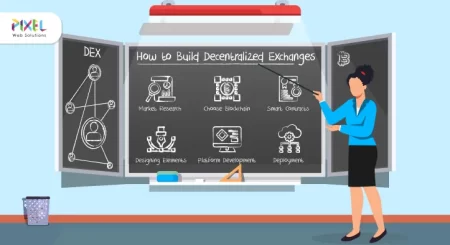
Creating a PancakeSwap-like decentralized exchange involves more than just technical development; it requires a defined process including strategic planning, protocol design, liquidity planning, governance structure, and long-term scalability vision.
White Label PancakeSwap Clone
We deploy enterprise-level White Label DEX frameworks that allow fast deployment cycles without sacrificing security or scalability. Our White Label PancakeSwap clone software encompasses all the essential elements, including smart contracts, liquidity pools, wallets, and connects all these components through multiple blockchain protocols.
Our infrastructure includes a complete UI/UX customization process, governance structure, feature modularity, and a scalability plan. This allows clients to quickly build a separate DeFi Identity with an already tried and tested technology.
- Pre-built AMM engines/liquidity pool development
- Integrated wallet connection/smart contract templates
- Reduced development risk by allowing for faster time-to-market.
- Custom UI/UX and platform branding capabilities
- Scale future feature set with scalable infrastructure
- Lower initial investment required vs. completely custom builds
PancakeSwap-Like DEX Development From Scratch
We design custom Decentralized Exchanges from the bottom up, so that you have total control of the Protocol, the Architecture of your System, and your EcoSystem. We created unique automated market maker (AMM) models, customized liquidity solutions, effective governance systems, and designed economies for tokens.
Additionally, we support cross-chain infrastructure. Our approach supports deep innovation, long-term scalability, and protocol ownership, enabling clients to build differentiated DeFi ecosystems rather than standard trading platforms.
- Custom AMM models as well as liquidity algorithms
- Custom Governance and Tokenomics
- Modular DeFi Architecture for future growth
- Cross-chain / Multi-Network Integrations
- Custom Fee Structures and Incentive Models
- Protocol-level Scalability and Performance Improvements
Building an MVP for a PancakeSwap-like DEX
Our team follows an MVP-first approach to validate market demand before large-scale investment. We offer core functionality, including token swapping, wallet connection, liquidity provisioning, secure smart contracts, real-time analytics, and performance monitoring.
The MVP model helps founders test with real users, analyze liquidity behaviour, optimise UX, and prepare for scaling the project using actual usage data to refine their platform before building out a complete DeFi ecosystem.
- Token Swap Functionality as the main core function
- Wallet Integration
- Laying Out and Managing Liquidity Pools
- Adding Additional Security Layers to Smart Contracts
- Transparency Related to Transactions in Real Time
- Analytics on User Behaviours and Feedback Loops
Each development approach serves a different strategic purpose. Our role is to align the right model with your business vision, investment strategy, and long-term ecosystem roadmap. This leads us to the next significant Decision Point…
Choose the Right DEX Development Approach
From white-label solutions to fully custom platforms, we help you pick the right model that fits your budget, timeline, and business goals.
MVP vs Custom Development – Which Is Best for Creating a DEX like PancakeSwap?
The MVP and Custom Development have completely different business objectives and provide completely different outcomes. The MVP model is focused on speed and validation, whereas the Custom Development model is focused on control, scalability, and ultimately building a long-term Ecosystem. This is why it’s important to choose the right development model for your DEX in order to determine how your DEX will build, scale, and compete within the DeFi market.
|
Factor |
MVP Development Model |
Custom Development Model |
|
Primary Goal |
Market validation & fast entry | Long-term ecosystem building |
| Time to Market | Very fast deployment |
Longer development cycle |
|
Initial Investment |
Lower | Higher |
| Platform Flexibility | Limited in early stages |
Full architectural freedom |
|
Feature Scope |
Core functionalities only | Advanced & modular features |
| Scalability | Gradual, phased scaling |
Designed for large-scale growth |
|
Innovation Potential |
Limited initially | High innovation capability |
| Risk Level | Low-risk entry model |
Strategic long-term investment |
|
Ideal For |
Startups, early-stage founders | Enterprises, Web3-native brands |
An MVP will help you validate demand and test adoption, whereas Custom Development will position you to build a differentiated, scalable DeFi Ecosystem via the platform on which your DEX will run. The model you choose for your business depends on a few key factors: how mature your business is, how you are funding it, and your vision for its future development. Once you have defined your development model, the next critical step will be to define the features and functionalities for launching a PancakeSwap-like DEX Platform.
Core Features To Be Integrated In a PancakeSwap-Style DEX Platform
A PancakeSwap-style DEX must deliver a seamless user experience, strong administrative control, and robust security architecture to build long-term platform credibility and ecosystem growth.
User Features
- Wallet Integration – Provide a seamless connection/integration to top wallets so users may trade directly from the wallet, minimizing the risk of custodial ownership of funds or transferring assets.
- Swapping Tokens – Easy-to-use swapping interfaces that allow users to quickly swap tokens using real-time pricing and limited friction.
- Liquidity Pools – Users can add liquidity to the DEX and earn rewards while being part of the overall liquidity ecosystem within the DEX.
- Staking & Yield Farming – Provide various earning opportunities for users by allowing them to stake tokens and earn passive income from yield farms.
- Governance Access – Through this token-based governance system, users will be provided with voting rights regarding protocol decisions, upgrades, and changes to policies.
- Cross-Chain Trading – Users will have access to multiple networks, enabling them to trade assets on different blockchains via one platform.
Admin Features
- Protocol Configuration – Provide admins with the ability to manage basic protocol parameters, fees, incentive liquidity, and transaction rules.
- Liquidity Management – Allow for real-time monitoring and analysis of liquidity pools to maintain a stable platform and healthy performance.
- Token Listing Management – Manage the onboarding, approval, and governance process of token listings on the platform to ensure that high-quality standards are maintained.
- Dashboard Analytics – Provide real-time data for user activity, volume, liquidity, and growth metrics so that strategic decisions can be made.
- Governance Controls – Provide structure around the process of creating proposals, voting, and upgrading protocols through structured governance modules.
- Network Integration Controls – Manage the configuration of blockchain networks, cross-chain bridges, and node integration from a single point of control.
Security Features
- Smart Contract Audits – Implement audited, verified smart contracts to minimize the likelihood of an exploit or vulnerability.
- Multi-Level Authentication – Multi-level access controls for administrative and system functions to prevent unauthorized access to the platform.
- Transaction Validity Systems – Automated systems to verify the legitimacy of transactions, thus helping to maintain the integrity of the protocol.
- Anti-Exploit Safety Measures – Deploy anti-exploit measures to protect against flash loan attacks, price manipulation, and liquidity exploits.
- Data Encryption – Include advanced encryption protocols to safeguard all layers of data and communication.
- Threat Monitoring in Real-Time – Add real-time threat detection systems to quickly find and respond to suspicious activity and threats.
The success of any Pancakeswap-like DEX depends on delivering safe, usable, and controlled systems together in one cohesive experience.These system elements are the essential building blocks for DEX user confidence, increasing liquidity, and the ability to grow.
Our PancakeSwap-Like Decentralized Exchange Development Process
Pixel Web Solutions follows a set and streamlined method to ensure the delivery of an efficient and high-performing decentralized exchange platform like PancakeSwap. Our approach combines strategic planning, technical excellence, and long-term scalability to build platforms that are secure, user-centric, and future-ready. Every stage is structured to align technology with business objectives and ecosystem growth.
Requirement Analysis – Understand client goals, target audience, and Platform features for a development roadmap. Detailed consultations are done to ensure alignment with the aims of the business.
Designing – Design and Prototyping UI/UX designs creating ease of navigation for the users. Layout mockups and prototypes are constructed for visualizing the platform’s layouts and functions.
Development of Smart Contracts – Smart Contracts are coded securely and efficiently for token swapping, staking, and liquidity pools. Each Contract has to undergo thorough testing to rule out vulnerabilities.
Blockchain Integration – Select a blockchain network (like Binance Smart Chain or Ethereum), and integrate multi-chain for better accessibility.
Testing and Quality Assurance – Do extensive testing to identify and resolve bugs for functionality and to keep the needs of the platform in focus. Quality assurance through security audits will be mandated for the client.
Deploy and Maintain – Deploy the DEX on a live server without hitches. Provide not only one-off support, updates, and maintenance, but also ongoing support; safety stays paramount.
The next important factor after defining the features will be the cost and strategy. So without any delay, we shall delve deeper into…
How Much Does it Cost to Start a DEX Like PancakeSwap?
The price of creating a decentralized exchange similar to PancakeSwap depends on how you develop it, the features, the amount of customization you need, and long-term scalability objectives. Each development method has its own benefits and drawbacks related to speed, flexibility, and control. These factors will affect how much money you need to invest.
White Label PancakeSwap Clone Solution
A white label DEX model will typically require development costs of $25,000 to $50,000 when implemented with only the core features. The basic features may include token swaps, wallet integration, core smart contract creation, and minimum liquidity pools.
For businesses that require further customization and additional DeFi features, the cost will generally be between $50,000 to $100,000. The white-label PancakeSwap-like DEX model is ideal for new and growing businesses looking for fast and economically viable ways to create their own DEX platform.
Creating an MVP for PancakeSwap-Like Decentralized Exchange
Generally, developing a functional MVP for a PancakeSwap-like DEX will typically cost similar to the White Label PancakeSwap Clone. The basic MVP version may cost between $25,000 to $50,000. And the advanced version may cost between $50,000 to $100,000, depending on the scope of features and level of customisation. Thus, founders can test for adoption and user behaviour, the dynamics of liquidity and performance of the DEX, while reducing financial risk and the complexity of development.
Developing a DEX like PancakeSwap From Scratch
Typically, costs for developing a fully customised protocol architecture, proprietary automated market maker (AMM) models, advanced security layers, cross-chain integrations, and scalable governance systems will range from $100,000 to $150,000. Custom development provides DEX founders with the highest level of control, innovation potential, and long-term scalability for the ecosystem.
Get a Cost Estimate for Your DEX
Every decentralized exchange has unique requirements. Share your idea and receive a tailored cost breakdown based on your features and tech stack.
How Long Does it Take to Build a DEX Like Pancakeswap?
The timeframe for developing a PancakeSwap-inspired decentralized exchange will depend on the selected development method, the type and complexity of features to be implemented, the extent of customization required, and whether specific third-party integrations are necessary.
An MVP or white-label approach with basic features such as token swaps, wallet integration, basic liquidity pools, testing, and launching would take approximately 8-12 weeks. If you require custom features such as governance tools, DeFi modules, or additional testing options, or if there are significant changes to current features in design, governance, or programming, the time needed for these changes will likely increase to approximately 12-16 weeks. This extra time is necessary for additional design, development, and integration across multiple chains.
A full custom-developed approach generally takes 16-24 weeks as it involves creating the entire architecture, protocol engineering, advanced security layers, and cross-chain infrastructure from scratch.
Ultimately, the time taken to create a DEX like PancakeSwap is directly influenced by your development model selection and aligning the right model with your business goals.
Why Choose Pixel Web Solutions to Develop a Decentralized Exchange like PancakeSwap?
Pixel Web Solutions is a leading Decentralized Exchange Development company in the field, by providing scalable, secure, and performant DEX platforms similar to PancakeSwap. Our experienced developers build end-to-end DeFi ecosystems designed for long-term growth.
We achieve this by utilizing deep blockchain knowledge, enterprise-class engineering, custom-built protocol architecture, and centrally driven business value propositions to provide next-generation PancakeSwap-like DEXs that are both scalable and focused on innovation. Our capabilities include smart contract development, multi-chain integration, as well as full security architecture and ongoing DEX performance, node reliability, and long-term plans for the DEX to support a growing ecosystem.
Ready to take the next step with your crypto exchange idea?
From planning to deployment, we provide end-to-end DEX development solutions to help you build, launch, and scale successfully.