Table of Contents
The crypto industry was once seen as a speculative “digital gold rush,” but it has now grown into a structured, multi-trillion-dollar global market. Millions of new users are entering the space, and crypto has become an integral part of mainstream finance.
This transformation has created a major business opportunity and has paved a new path for promising exchange platforms to emerge in the market. The Crypto exchange industry has been dominated by a few popular exchange platforms, and Coinbase is one among them. Coinbase has been in the competition since June 2012 and stayed on top for its 10x-folded security enhancements and convincing user interfaces. The growth of Coinbase has influenced many entrepreneurs to kick-start an exchange like Coinbase. But,
Building a crypto exchange like Coinbase today is not just about launching a trading platform, it is about creating a secure, compliant, and user-friendly financial ecosystem. Modern exchanges function as “Financial Super Apps,” connecting traditional banking with decentralized finance and offering services such as trading, staking, payments, and asset custody in one place.
The crypto exchange industry is evolving rapidly, and 2026 presents a strong opportunity to launch your own exchange. In this guide, we’ll walk you through how to build a competitive crypto exchange like Coinbase, covering market drivers, business models, development methods, cost considerations, monetization strategies, and how to scale your platform globally.
Why Build a Crypto Exchange Like Coinbase in 2026?
In 2026, crypto has matured with clearer regs, institutional inflows, and real utility. Centralized exchanges (CEXs) like Coinbase still dominate for usability and compliance, making now a prime time to build one.
Growing Cryptocurrency Market Opportunities
The crypto exchange market is booming:
- According to Coherent Market Insights, the global crypto exchange platform market is projected at ~$68-86 billion in 2026, growing to $170-314 billion by 2030-33 (CAGR 20-26%). The Business Research Company; Coherent Market Insights.
New CEXs can capture fiat on-ramps, compliance, and emerging regions.
Profit Potential of Crypto Exchange Platforms
CEXs offer high margins and diversified revenue:
- Trading fees + staking, listing, yield products, and institutional services generate billions (e.g., Coinbase 2025 revenue ~$7.2 billion, up 9% YoY), Coinbase Q4’25 Shareholder Letter.
- Scalable network effects: Deeper liquidity attracts volume; compliant platforms win institutional flows.
Target Audience for Coinbase-Style Exchanges
Focus on users valuing trust and ease:
- Retail beginners: Simple onboarding, fiat ramps, education.
- Experienced traders: Advanced tools like futures and analytics.
- Institutions: Custody, OTC, compliance (driving steady revenue).
- Global/emerging markets: Stablecoins for remittances in Asia/Latin America.
CEXs win here over DEXs for security and regulation. Building in 2026? Niche down (e.g., regional, AI tools, RWAs) and ride the tailwinds, the market’s bigger and more mature than ever!
When your audience is defined clearly, monetization becomes strategic rather than speculative, which leads directly into revenue modeling.
How To Make Money By Starting a Crypto Exchange Like Coinbase?
Launching a Coinbase-like centralized crypto exchange (CEX) in 2026 can be highly profitable if you build for scale, compliance, and user trust. Revenue comes from multiple streams, not just trading volume anymore. Top platforms like Coinbase generate billions through diversification (e.g., Coinbase 2025 revenue ~$7.2B total, with subscription/services at $2.8B up big from prior cycles. Here’s how you can monetize:
Trading Fee Commission
This is the core money-maker, the biggest slice for most exchanges. Charge a small percentage (typically 0.1-0.6%) on every buy/sell trade, often using a maker-taker model
Listing Fees for New Tokens
Exchanges charge new crypto projects a one-time fee to list their tokens, often ranging from thousands to millions of dollars, depending on demand and platform size.
This generates high upfront revenue while increasing trading volume and market activity on the exchange.
Withdrawal and Deposit Fees
Users pay fees when transferring crypto or fiat in and out, covering blockchain network costs plus a profit margin. These small but frequent charges create consistent income, especially during high market volatility.
Premium Subscription Services
Exchanges offer monthly subscription plans that provide benefits like reduced trading fees, priority support, and advanced tools. This creates stable, recurring revenue that helps balance income during slow trading periods.
Margin Trading Fees
Exchanges allow traders to borrow funds for leveraged trading and charge interest, along with higher trading fees. They also earn from funding rates, increasing profits while managing risk through liquidation systems.
Staking and Yield Farming Revenue
Users stake their crypto through the exchange to earn blockchain rewards.
The exchange takes a commission from those rewards, creating passive, high-margin income.
Together, these revenue streams form the financial backbone of your exchange. The next question will be how to build such a platform effectively.
How to Start a Crypto Exchange Like Coinbase
Launching a crypto exchange like Coinbase is no longer just about trading, it’s about building a global financial gateway. Whether you are a startup or an enterprise, the development path you choose determines your cost, speed, and market positioning.
Here is a detailed breakdown of the three primary development models.
1. White Label / MVP: Basic Features (Entry Level)
This model is designed for rapid market entry and “idea validation.” It focuses on the absolute essentials to get users trading immediately.
- User Onboarding: Simple email/phone registration with basic automated KYC.
- Spot Trading Engine: Supports a curated list of top 10–20 cryptocurrencies (BTC, ETH, Stablecoins).
- Integrated Hot Wallets: Secure, ready-to-use digital wallets for user deposits and withdrawals.
- Admin Dashboard: Basic tools for managing users, setting fee structures, and monitoring trades.
- Essential Security: 2FA (Two-Factor Authentication) and standard SSL encryption.
2. White Label / MVP: Mid-Level Features (Professional Grade)
This path is the current industry standard for 2026. It adds the “Super-App” features that modern users expect, focusing on retention and higher revenue.
- Fiat On/Off Ramps: Deep integration with banks and payment providers (Visa, Mastercard, SEPA) to allow direct crypto purchases.
- Mobile App (iOS/Android): A fully branded, high-performance mobile experience.
- Staking & Yield: Automated “Earn” modules where users can stake assets like ETH or SOL for rewards.
- Liquidity Aggregation: Connectivity to global liquidity providers to ensure users get the best prices with zero slippage.
- Advanced KYC/AML: Real-time identity verification and anti-money laundering risk scoring.
3. Development From Scratch (Enterprise Level)
This is for visionaries building a proprietary ecosystem. You own 100% of the IP, allowing for endless scaling and unique financial products.
- High-TPS Matching Engine: A custom-engineered engine capable of handling millions of orders per second with ultra-low latency.
- Institutional Custody (MPC): Bank-grade security using Multi-Party Computation to secure billions in assets.
- Derivatives & Perpetual Trading: Advanced trading options including futures, options, and up to 100x leverage.
- RWA & Prediction Markets: Built-in modules for trading tokenized real estate and betting on real-world event outcomes.
- AI-Native Operations: AI-driven fraud detection, predictive liquidity management, and personalized user trading signals.
This model supports institutional dominance and full IP ownership, positioning your exchange as a global infrastructure player. Selecting between these paths is not purely technical, it’s strategic.
Creating an MVP Vs Enterprise-Grade Crypto Exchange Development – Which Is Best?
Choosing the right development path is a strategic decision that depends on your budget, timeline, and long-term goals. While an MVP is about speed to market, Enterprise-Grade development is about market dominance.
| Feature | MVP (Minimum Viable Product) | Enterprise-Grade Development |
| Core Objective | Rapid market entry and idea validation. | Long-term market dominance and scalability. |
| Cost Investment | Low to Moderate; budget-friendly for startups. | High; requires significant capital/VC funding. |
| Matching Engine | Standard: handles thousands of TPS. | Custom; millions of TPS with ultra-low latency. |
| Security Level | Standard (2FA, Encryption, Hot Wallets). | Military-Grade (MPC, HSM, Multi-sig Custody). |
| Customization | Limited to UI/UX and basic features. | 100% Customization; unique features and full IP ownership. |
| Regulatory Tools | Automated basic KYC/AML modules. | Global-ready compliance with deep forensic tools. |
| Trading Options | Basic Spot trading and simple swaps. | Derivatives, Futures, RWA, and Margin trading. |
| Support & Growth | Scaling occurs in phases based on revenue. | Built to handle massive global traffic from Day 1. |
Your decision should align with funding capacity, regulatory ambitions, and global expansion plans. Once your foundation is chosen, feature architecture becomes your next competitive differentiator.
Must-Have Features to Build a Crypto Exchange Like Coinbase
Our Coinbase clone script provides a feature-rich and secure platform to launch your crypto exchange business. Here’s what you get with every powerful feature:
Multi-Cryptocurrency Support:
Allow users to trade a variety of assets, including Bitcoin, Ethereum, and stablecoins. This also includes support for Tokenized Stocks and RWAs to provide a unified investment experience.
AI-Driven KYC/AML Integration:
Maintain regulatory compliance with lightning-fast, automated identity verification. It includes AI fraud detection that flags suspicious onboarding patterns instantly, building deep trust with banking partners.
High-Performance Trading Engine
Instantly execute orders with a scalable engine designed for high-frequency trading. It supports Spot, Futures, and Margin trading with ultra-low latency, ensuring no “glitches” even during massive market volatility.
Advanced Admin Dashboard:
Take complete charge of your operations. Our dashboard now includes Predictive Analytics, allowing admins to forecast liquidity needs and monitor system health through an intuitive, real-time command center.
Hybrid Wallet Integration:
Provide the best of both worlds with Hot, Cold, and Institutional MPC wallets. This ensures users’ funds are protected by the highest level of encryption and multi-signature protocols.
Automated Liquidity Management:
Never worry about “empty” order books. Our clone integrates with global liquidity aggregators to ensure deep order books and minimal slippage for every trading pair from day one.
Referral & Staking Modules:
Increase user participation and site growth with embedded referral programs and crypto staking functionalities. Reward users for inviting others and holding assets on your platform.
While these features provide the engine for your business, the success of a Coinbase-like platform also depends on your technical foundation. Before that, you should know how much it costs to start a crypto exchange like Coinbase. Let’s see that..
These features create operational strength, but operational strength must be supported by financial clarity. Therefore, let’s examine development costs.
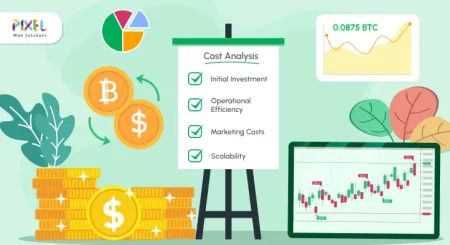
How Much Does It Cost to Build a Crypto Exchange Like Coinbase?
The total investment depends on the development path you choose. In 2026, costs have shifted due to the higher requirements for AI-driven security and global compliance.
Development Cost Breakdown
| Development Path | Estimated Cost (USD) | Best For |
| White Label / MVP basic features | $25,000 to $50,000 | Startups want a fast launch with core features. |
| Whitelabel /MVP Mid-Tier features | $50,000 to $100,000 | Established firms are adding staking, mobile apps, and margin trading. |
| Custom / Enterprise | $100,000 to $150,000+ | Global giants needing 100% IP ownership and custom matching engines. |
Cost correlates directly with customization, compliance depth, and scalability, meaning your budget influences your competitive ceiling. Beyond capital, however, timing also defines success.
How Long Does It Take to Launch a Crypto Exchange Like Coinbase?
Time-to-market is a critical competitive advantage. Your choice of software architecture dictates your launch date.
MVP / White Label Solution Timeline
- Estimated Time: 8 to 12 Weeks
- This path uses a pre-built core. Most of the time is spent on branding (UI/UX), configuring your specific trading pairs, and integrating your chosen payment gateways.
MVP / White Label with Mid-Level Features Timeline
- Estimated Time: 12 to 16 Weeks
- This option expands beyond the basic MVP by incorporating advanced functionalities. This model balances speed with competitive feature depth.
Custom Development Timeline
- Estimated Time: 16 to 24 Weeks
- Building from scratch requires extensive coding for the matching engine, rigorous security audits, and multiple phases of stress testing to handle institutional-grade traffic.
With time and cost established, execution methodology becomes the determining factor. Those are…
Key Steps To Develop a Crypto Exchange Like Coinbase
We adhere to a structured, 2026-ready development lifecycle to deliver a high-performance exchange platform that addresses global market requirements and provides a seamless trading experience.
Requirement Analysis: The journey starts with understanding the client’s business objectives, target market, and feature requirements. Detailed consultations are carried out to collect the information needed to develop a comprehensive plan based on these specific needs.
Designing: Intuitive UI/UX designs are developed to offer a smooth and natural trading experience. Usability, visual attractiveness, and simple navigation are given top priority to provide an interactive interface for all users.
Development: The core features of the platform are built, including secure trading tools, wallet integration, and user account management. Smart contracts are utilized to provide transparent and secure transactions across the system.
Blockchain Integration: The chosen blockchain network is integrated to facilitate efficient and secure transactions. The platform is developed to support multiple cryptocurrencies and decentralized features to ensure long-term scalability.
Testing and Quality Assurance: Comprehensive testing is carried out to detect and fix bugs, vulnerabilities, and performance issues. A QA process is followed to ensure the platform provides the highest levels of security, functionality, and reliability.
Deployment and Maintenance: After successful testing, the platform is deployed on a live server through a smooth launch process. Ongoing support and maintenance are provided to ensure optimal performance and to create space for future upgrades.
Each phase ensures regulatory alignment, performance optimization, and scalability readiness, delivering not just a product, but a resilient financial ecosystem. However, long-term competitiveness also depends on future-proof innovation.
Future Trends in Crypto Exchange Development
As we move through 2026, the crypto landscape is shifting from simple trading to a “Super-App” model. To remain competitive, your exchange must integrate these four defining trends:
AI-Powered Trading:
AI enhances trading accuracy through predictive market analytics and real-time sentiment analysis. It also enables automated bots that execute data-driven strategies with minimal human intervention.
DeFi Integration:
Integrating DeFi allows users to access lending, borrowing, and staking directly from the exchange dashboard. This bridges centralized platforms with decentralized financial opportunities for higher yield potential.
NFT Marketplace Integration:
Built-in NFT marketplaces let users mint, buy, and trade digital assets within the same platform.
NFTs can also be leveraged for utility, such as collateralized loans or exclusive platform access.
Cross-Chain Trading:
Cross-chain functionality enables seamless asset swaps across networks like Ethereum, Solana, and BNB Smart Chain. This eliminates reliance on external bridges and reduces friction in multi-chain transactions.
Adopting these innovations positions your exchange not just for current demand, but for the next market cycle. And to execute at that level, choosing the right development partner is critical.
Why Choose Pixel Web Solutions for Coinbase-Like Crypto Exchange Development?
Selecting the right partner is the foundation of a successful venture in the digital asset space. As a premier cryptocurrency exchange development company, Pixel Web Solutions brings the engineering excellence and visionary thinking required to transform your ideas into a market-leading platform.
Our Expertise in Blockchain Development
- Proven Track Record: As a premier cryptocurrency exchange development company, we have deployed numerous global platforms with a 99.9% uptime record.
- Security-First Approach: We implement “Bank-Grade” security, including MPC wallets and AI fraud detection, to safeguard user assets and your brand’s reputation.
- Total Customization: We deliver unique solutions tailored to your brand and regulatory needs, distinguishing us as a top cryptocurrency exchange development company.
- 24/7 Support: We provide 24/7 maintenance to ensure your platform stays ahead in the evolving crypto market.
Ready to build the next market-leading exchange? Contact Pixel Web Solutions for a free demo today!