








Blockchain integration means connecting a blockchain ledger, smart contracts or stablecoin rails to the systems your business already runs, such as your ERP, payment stack, website or partner portals, instead of rebuilding them from scratch. To integrate blockchain into your business, pick one process where shared, tamper-evident records or faster settlement pay off, choose the right network, connect it through APIs or middleware, and prove the value in a pilot before you scale.
A famous quote by Gil Penchina says, ‘Mobile was Internet 2.0, it changed everything. Crypto is Internet 3.0’
That idea is now showing up inside ordinary businesses, not just crypto firms. In 2026, Visa settles card transactions with US banks in USDC, Shopify merchants can accept stablecoins through their normal checkout, and Broadridge runs hundreds of billions of dollars of repo trades a day on a distributed ledger. None of them threw away their core systems. They integrated blockchain into them.
Is it necessary to create a business with blockchain from scratch?
Maybe not.
There comes the role of blockchain integration, in which a blockchain network is connected to your existing systems. For instance, if you run a healthcare app, you could record a tamper-evident proof (a hash) of each lab report on a blockchain, so a hospital or insurer can verify that the report has not been altered, while the patient's actual data stays in your secure database.
Key Takeaways
- Integrate, don't replace: most successful projects keep the existing ERP, CRM or payment stack and add a blockchain layer through APIs, middleware or a provider.
- Real adoption is in settlement and payments: Visa reported a $3.5 billion annualized stablecoin settlement run rate, and Broadridge's ledger processed $7.4 trillion of repo in August 2026.
- Pick an integration pattern first, then a chain: anchoring records, stablecoin payments, tokenized assets, shared partner ledgers and smart contract automation each need a different stack.
- Costs scale with scope: Pixel Web Solutions' blockchain consulting starts from $5,000, an enterprise proof of concept from $20,000, and full blockchain applications run $25,000 to $150,000.
- Blockchain is not risk-free: smart contract bugs, key management and regulation (VARA, ADGM, CBUAE, MiCA, the US GENIUS Act) must be planned for from day one.
What is Blockchain Integration?
Blockchain integration is the process of incorporating blockchain technology into existing systems, applications, or workflows to improve efficiency, security, and transparency. It involves connecting blockchain's decentralized ledger with other technologies or platforms to enable seamless data sharing, transaction recording, and automation of processes across multiple stakeholders.
Blockchain integration goes beyond simply using blockchain as a standalone solution. It lets businesses use its benefits in real-world scenarios by linking it to databases, enterprise software, IoT devices, payment gateways, or other systems.
In practice, the integration usually has three layers:
- Your existing systems: ERP, CRM, e-commerce platform, mobile app or core banking system.
- An integration layer: APIs, middleware, event listeners and oracles that move data between your systems and the chain, plus key management for signing transactions.
- The blockchain layer: a public network (such as Ethereum, Base or Solana), a permissioned ledger (such as Hyperledger Fabric or Hyperledger Besu), and the smart contracts that run on it.
With features like tamper-evident ledgers, smart contracts, and cryptographic signatures, blockchain integration can reduce reliance on intermediaries, lower reconciliation costs, and provide real-time updates. It streamlines workflows, gives end-to-end traceability, and builds trust among stakeholders who do not share one database. Our guide to real-world use cases of blockchain technology shows where this already works, industry by industry.
Let’s explore the business benefits of blockchain integration to the existing system.
Business Benefits Of Integrating Blockchain
Blockchain integration opens new possibilities across many sectors. It offers business benefits for new startups and established enterprises alike. Some of them are listed below.
-
Data Security
The foremost benefit of integrating a blockchain network is tamper evidence. Records are saved in blocks that are linked by cryptographic hashes and replicated across many nodes, so a changed record is immediately detectable. Data written to a public blockchain cannot be quietly edited or deleted. As a result, partners and auditors can trust the record without trusting a single administrator.
-
Reduced Risk
A shared ledger removes many manual reconciliation steps, which is where errors and disputes usually start. Blockchain does not remove technical risk entirely, though. Smart contracts can contain bugs, and private keys can be stolen: about $972 million was lost to 207 crypto hacks in the first half of 2026, according to Immunefi's report as covered by The Block. Audits, testing and secure key management are what actually reduce the risk.
-
Transparency
Blockchain networks are widely used for their transparent nature. On a public chain, every transaction can be viewed and verified by any party. On a permissioned chain, every approved participant sees the same version of the truth. In both cases, confirmed blocks cannot be modified.
-
Scalability
Blockchain capacity has improved a lot. Layer 2 networks such as Base and Arbitrum process transactions for a fraction of a cent, and Ethereum gas was about 0.11 gwei on 9 October 2026. However, public chains are still slower than a central database for raw throughput, so high-volume systems usually batch records or keep heavy data off-chain. Choosing the right network for your transaction volume matters, especially for blockchain integration in the finance sector.
-
Cost-Effective
Integrating blockchain technology into the existing system can reduce costs for third-party services, middlemen, and brokers. It also cuts physical paperwork, manual data processing and the reconciliation work between companies that each keep their own copy of a record.
-
Global Accessibility
People all over the world can use a blockchain-integrated website or system. It enables reliable, round-the-clock transactions across borders. For example, stablecoins let a business pay or get paid in minutes, even on weekends, and can reach customers in regions that traditional banking serves poorly.
-
Data Privacy
Users can keep control over their own data and credentials in a blockchain-integrated system. But public blockchains are transparent by default, so personal or sensitive data should stay off-chain, with only a hash or proof recorded on-chain. This is also how projects stay compatible with privacy laws such as the GDPR, which give people the right to have their data erased.
These are the main benefits of integrating blockchain technology into the existing system. As the world becomes more digital, more businesses are adding blockchain to their platforms for measurable outcomes.
5 Blockchain Integration Patterns, With Real 2026 Examples
Most competitor guides stop at "choose a blockchain". In practice, the first decision is which integration pattern you need, because each one changes your stack, budget and timeline differently. Here are the five patterns businesses actually use, each with a live example.
| Integration Pattern | What It Does | Real Example | What Changes in Your Stack | Typical Effort |
|---|---|---|---|---|
| 1. Anchoring and verification | Records a hash of documents or events on-chain to prove they were not altered | De Beers' Tracr registers diamonds at recovery | A small service that hashes records and writes them to a chain, plus a verify page | Low: weeks |
| 2. Stablecoin payments and settlement | Accepts or settles payments in USDC or another stablecoin | Shopify merchants accept USDC on Base; Visa settles with US banks in USDC | A payment provider or crypto payment gateway, treasury and accounting rules | Low to medium |
| 3. Tokenized assets | Issues or settles real-world assets, such as bonds or fund units, as tokens | Broadridge's Distributed Ledger Repo platform | Issuance platform, investor onboarding (KYC), custody, legal structure | Medium to high |
| 4. Shared partner ledger | Gives several companies one permissioned ledger instead of separate databases | Swift's planned blockchain-based shared ledger for 24/7 cross-border payments | Permissioned network nodes, governance rules between partners, ERP connectors | High |
| 5. Smart contract automation | Executes rules automatically, such as releasing a payment when a shipment arrives | Escrow-style payment contracts in commerce, such as the authorize-and-capture contract behind Shopify's USDC checkout | Smart contracts, oracles for outside data, event listeners in your back end | Medium |
Here is what the examples show in numbers:
- Payments: Visa launched USDC settlement for US banks on Solana in December 2025, with its stablecoin settlement volume passing a $3.5 billion annualized run rate as of 30 November 2025. Cardholders noticed nothing; only the back-end settlement changed.
- Commerce: Shopify enabled USDC payments on Base with Coinbase and Stripe in June 2025. Merchants receive their local currency by default, so their accounting and payouts stay the same.
- Capital markets: Broadridge's Distributed Ledger Repo platform processed an average of $351 billion a day, or $7.4 trillion, in August 2026, and in September 2026 it extended the platform to G7 government securities.
- Bank networks: Swift announced in September 2025 that it would add a blockchain-based ledger to its infrastructure, designed with more than 30 financial institutions and starting from a Consensys prototype. It runs alongside Swift's existing messaging, not instead of it.
The lesson is consistent: the winners integrated blockchain where several parties needed the same record or faster settlement, and kept everything else in their existing systems. If none of the five patterns fits your problem, a regular database is probably the better tool.
Now, it is the ideal time to know the core intent of the blog. That is…
How To Integrate Blockchain Into Your Business Infrastructure?
Blockchain integration is a manageable process when it is done by the right blockchain development firm and its developers. So, first, pick experienced developers and architects to integrate the blockchain solutions. Let’s see the detailed step-by-step process of blockchain technology integration.
Step 1: Identify The Use Case
The first and foremost step is to define the business problem and match it to one of the five integration patterns above. Startups and enterprises should look for processes with several parties, frequent disputes, slow settlement or heavy reconciliation. Common candidates include real estate, supply chain, healthcare records, online identity verification and cross-border payments.
Next, write down the success metrics before any code is written, for example "cut invoice reconciliation from 5 days to 1" or "settle supplier payments on weekends". Then check the readiness of your current systems: which ERP, CRM or database will feed the blockchain, and who owns that data. Choosing the use case that suits your budget and vision is essential to complete the integration effectively.
Step 2: Choice Of Blockchain Network
The core part of the blockchain API integration process is choosing the right blockchain network. The first choice is between a public network, where anyone can verify the data, and a permissioned network, where only approved companies run nodes. Our guide to private blockchain development explains when a permissioned ledger is the better fit. Widely used options in 2026 include:
- Ethereum: the most widely used smart contract network, with the deepest tooling and stablecoin liquidity.
- Ethereum layer 2s such as Base and Arbitrum: Ethereum security at a fraction of the cost, popular for payments and consumer apps.
- Solana: high throughput and low fees, used by Visa for its first USDC settlements.
- Polygon: low-cost EVM chain used for payments, loyalty and tokenization projects.
- Hyperledger Fabric and Hyperledger Besu: permissioned frameworks for consortiums and enterprise ledgers.
- Corda: a permissioned ledger designed for regulated financial institutions.
Our comparison of the top blockchain platforms covers these networks in more depth. Also choose the blockchain based on the consensus mechanism. The consensus mechanism is the set of rules nodes use to agree on which transactions are valid. The main types are:
- Proof-of-Work (PoW): used by Bitcoin; very secure but energy-intensive and slow.
- Proof-of-Stake (PoS): used by Ethereum since September 2022, and by Solana and most modern chains.
- Proof-of-Authority (PoA): a set of known, approved validators; common in private and consortium networks.
- Byzantine fault tolerant (BFT) variants: such as QBFT and IBFT in Hyperledger Besu, giving fast finality between known parties.
Some sectors require higher transaction speed with lower fees, while others need strict privacy between participants. Based on the needs of the business project, the blockchain network can be chosen. It can also be connected to a website or app through an API, using node providers or your own nodes.
Step 3: Integration Of Blockchain
The development process starts with a Proof-of-Concept (PoC). It tests the essential challenges, feasibility and outcomes of the blockchain API integration on a small scale. This step also involves mapping the existing system's workflows, data sources and asset inventory. Knowing the weak points and inefficiencies of the current system helps to integrate the right blockchain network in the right place.
After that, the blockchain network can be integrated by designing the technical framework without compromising efficiency, cost, and functionality. A typical integration includes:
- APIs and middleware that translate events in your ERP or app into blockchain transactions, and back.
- Smart contracts that hold the business rules. Our guide on how to create a smart contract walks through this step.
- Oracles that bring outside data, such as prices or delivery confirmations, onto the chain.
- Key management using hardware security modules, MPC or a custody provider, so no single employee can move funds.
- Indexers that read on-chain events back into your dashboards and reports.
The integration process also separates on-chain and off-chain data:
-
On-chain Data: critical data like transactions, asset ownership, and time stamps.
-
Off-chain Data: personal or sensitive information, larger datasets, files that change often, and documents stored in cloud or decentralized storage, with only a hash kept on-chain.
With this data map and a current system audit, the internal framework can be designed. Through this, the blockchain network can be integrated within the platform.
Step 4: Testing
Blockchain integrations connect money, data and outside systems, so there are many places for errors. To reduce them, run a full quality assurance process on a testnet such as Ethereum's Sepolia before touching real funds. In this process, the blockchain system is validated based on transaction speed, reliability, scalability, latency, fault tolerance and what happens when a node or API goes down.
Smart contracts that hold value should also get an independent smart contract audit. Through multiple tiers of testing, businesses can ensure that their blockchain technology integration delivers fast, reliable, and scalable operations, meeting both current and future demands.
Step 5: Beta Version Launch
After successful testing, launch a beta version of the product to a limited group of users or partners. Real feedback comes when the product reaches the target audience. Through this process, user engagement, traffic, and behavior can be analyzed, along with the success metrics you set in Step 1. Based on that, the Proof-Of-Concept can be refined.
Users and partners will suggest changes to improve the platform's usage and success. Hence, launching the beta version is essential. It also helps startups raise funds for the final product launch and development.
Step 6: Deployment
Once the beta proves its value, the final product can be launched into the market. This is where the system is open to every user. As it is launched to a wider audience, the value of the blockchain technology integration can be measured. Along with that, regular updates, monitoring, key rotation and maintenance must be provided for an enhanced experience.
Integrating blockchain is just the start, Discover the essential steps and best practices in our expert-backed guide: How to Create a Blockchain from Scratch
Common Challenges in Blockchain Integration (and How to Solve Them)
Every competitor guide warns about challenges, but few say how to handle them. Here are the five that come up most often:
- Legacy systems that cannot talk to a blockchain: most ERPs and databases were never designed for it. The fix is a middleware or API layer that listens for events on both sides, so the old system does not need to change much.
- Personal data and privacy laws: an immutable ledger conflicts with the right to erase data. Keep personal data off-chain and store only hashes, or use a permissioned ledger with access controls.
- Key management: whoever holds the private keys controls the assets. Use MPC wallets, multisig or a qualified custodian, with approval rules for large transactions.
- Volatile fees: gas prices change with demand. Batch transactions, use a layer 2, or choose a chain with stable fees for high-volume flows.
- Regulation: if the integration touches payments, tokens or customer assets, licensing may apply. In the UAE, that means Dubai's VARA, Abu Dhabi's ADGM FSRA or the Central Bank of the UAE depending on the activity; in the EU, the MiCA regulation; and in the US, the GENIUS Act for payment stablecoins. Take legal advice before launch.
How Much Does It Cost To Integrate Blockchain Technology?
Blockchain integration cost depends on the pattern you choose, the number of systems you connect and the level of security and compliance required. Here are Pixel Web Solutions' published starting prices for the main stages:
| Stage | What You Get | Pixel Web Solutions Price |
|---|---|---|
| Blockchain consulting | Use case review, pattern and network choice, architecture | from $5,000 |
| Enterprise proof of concept | A working pilot connected to one of your systems | from $20,000 |
| Full blockchain application | Production integration, smart contracts, dashboards, testing | $25,000 to $150,000 |
| Crypto payment gateway | Stablecoin and crypto acceptance for your platform | from $6,000 |
| RWA single-asset issuance | Tokenizing one real-world asset | from $6,000 |
| Custom blockchain work | Ongoing development by the hour | from $40/hour |
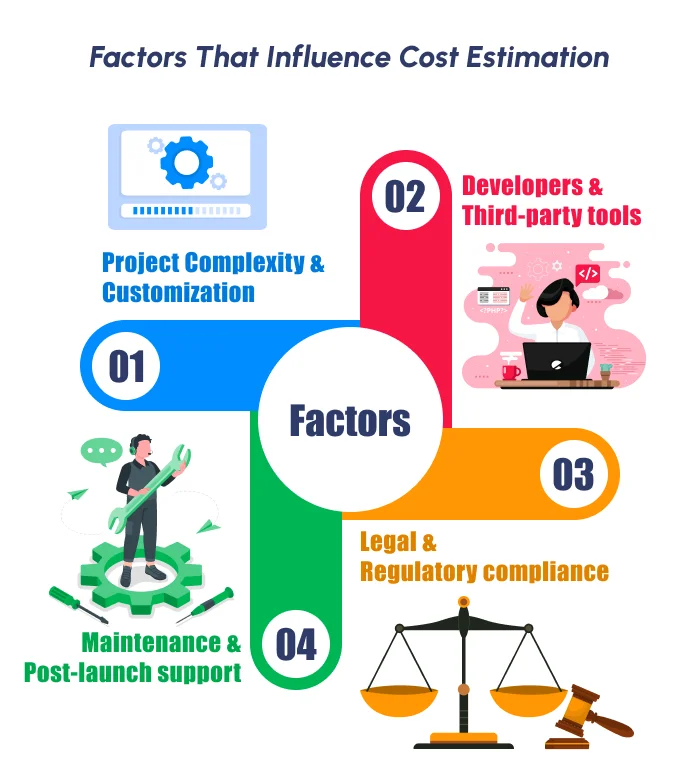
Smart contract audits, third-party node or custody services and licensing are budgeted separately. These factors also influence the cost estimation:
Worked Example: The Running Cost of Anchoring Records on Ethereum
A common worry is that blockchain fees will make integration expensive to run. Here is the maths for the simplest pattern, anchoring. Suppose a logistics company hashes all of its shipment records every hour and writes one combined hash (a Merkle root) to Ethereum mainnet:
- Transactions per month: 24 a day x 30 days = 720 transactions
- Gas per transaction: about 50,000 gas for a simple contract write, so 720 x 50,000 = 36 million gas a month
- At 0.11 gwei (the Ethereum gas price on 9 October 2026): 36,000,000 x 0.11 gwei = 0.00396 ETH
- At an ETH price of about $2,487 (CoinGecko, 9 October 2026): about $10 a month
Gas prices change quickly, though. At 10 gwei, a level Ethereum often reached in busy past markets, the same workload would cost about 0.36 ETH, or roughly $895 a month. That is why many businesses anchor on a layer 2 network, where the cost stays near zero even in busy periods, or batch records less often. The lesson: the build is the main cost of an integration, and the running fees are usually small if the architecture is right.
Presently, many startups are also showing interest in creating blockchain mobile apps because of their reliable and secure functioning. Hence, the overall blockchain development cost may vary. With the right guidance, support, and expert advice, unnecessary costs can be avoided. As we have headed to the end part of the blog, now it's time to know the right blockchain development partner. Investing in a digital business plan requires patience and resilience.
Pixel Web Solutions stands tall amidst all the challenges of blockchain integration.
How does Pixel Web Solutions help you with blockchain integration?
Pixel Web Solutions is an enterprise blockchain development company that has helped startups and enterprises build on blockchain since 2012. Operating from Ras Al Khaimah, UAE and Madurai, India, its team delivers blockchain integration services that connect smart contracts, stablecoin payments and tokenized assets to the systems clients already use.
Whether you're aiming to create a decentralized application, streamline supply chains, accept stablecoin payments or develop smart contracts, its developers guide you through every step of the process, from blockchain consulting and a proof of concept to production and support. Build a safer business model with experienced blockchain developers and testers. Contact the Pixel Web Solutions team to get a quote for your blockchain integration.
Frequently Asked Questions
How long will it take to integrate blockchain into the existing system?
A consulting phase and proof of concept usually take a few weeks to a few months. A full production integration typically takes around 3 to 10 months, depending on the integration pattern, the number of systems connected, customization and compliance work. Simple anchoring or payment integrations sit at the short end, and shared partner ledgers at the long end.
What industries benefit from blockchain integration?
Popular industries using blockchain integration are banking and payments, capital markets, supply chain and logistics, healthcare, real estate, insurance, energy, e-commerce and the Internet of Things (IoT). The strongest results so far are in payments, settlement and asset tokenization.
How does blockchain integration improve the security of the existing platform?
Blockchain uses cryptographic hashing, digital signatures and replication across many nodes, which makes records tamper-evident and removes single points of failure for that data. Once confirmed, records cannot be changed without detection. Security still depends on audited smart contracts and well-protected private keys.
How do I know if blockchain is right for my business?
Blockchain is a good fit when several organizations need to share and trust the same records, when settlement is slow or expensive, or when you need to prove that data has not been altered. If one company controls all the data and trusts its own database, a traditional database is usually cheaper and simpler.
How much does blockchain integration cost?
It depends on scope. Pixel Web Solutions offers blockchain consulting from $5,000, an enterprise proof of concept from $20,000, and full blockchain applications from $25,000 to $150,000. Running costs, such as network fees, can be very small: anchoring 720 records a month on Ethereum cost about $10 at October 2026 gas prices.
How do I integrate blockchain into my business website?
The most common ways are to add a crypto or stablecoin payment gateway at checkout, add wallet login so users can connect their own wallets, or call smart contracts and node APIs from your back end. Our guide on how to integrate a crypto payment gateway covers the payment route step by step.
Should I use a public or private blockchain for integration?
Use a public blockchain when outside users or customers need to verify data, hold tokens or pay with stablecoins. Use a private or permissioned blockchain when only known partners take part and the data must stay confidential. Many businesses combine both, keeping data on a private ledger and anchoring proofs to a public one.
Blockchain integration is no longer an experiment for early adopters. With the right pattern, network and partner, any business can add blockchain integration to its existing platforms and measure the results within months.