Table of Contents
“How much does developing a mobile application cost?”
This is one of the most common confusing questions every startup founder and business owner asks. This is also one of the hardest to answer with a single number. The mobile app development costs can vary and range from a few thousand to several thousand. This purely depends on what you build, how you build it, and who builds it. A basic MVP and a full-scale enterprise app may look similar on the surface, but their costs differ drastically.
So if you are one of those businesses looking for an entry, then read this article. This blog will break down mobile app development costs in detail, helping you understand pricing factors. By the end of this blog, you will plan your investment and app budget smartly.
Let’s begin with
How Much Does it Cost to Develop a Mobile Application?
On average, the cost of developing a mobile application can range between $5,000 to $30,000 or above, depending on the business requirements. There is no fixed pricing model for mobile app
development, as every industry has its own set of features and requirements. A basic app with minimal features costs significantly less than a feature-rich, scalable application designed for a large user base. To give you a clearer picture, mobile app development costs are generally categorized into Basic, Moderate, and Advanced applications, based on functionality and technical depth.
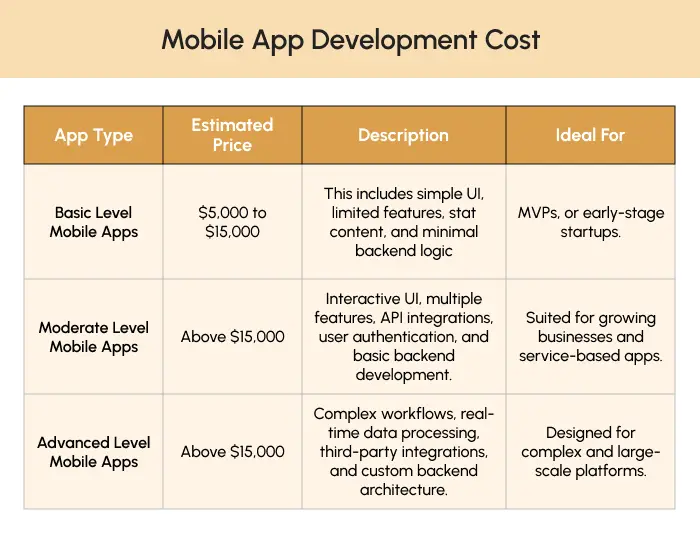
This classification helps you understand where your app fits perfectly. This allows you to allocate your budget wisely, avoid unnecessary features, and plan development phases easily. Now, let’s explore in detail what determines this mobile app development cost exactly,
How is the Mobile App Budget Allocated? – A Detailed Breakdown!
Mobile app development is a step-by-step development journey. Understanding this allocation will help businesses plan better. Here is a detailed overview,
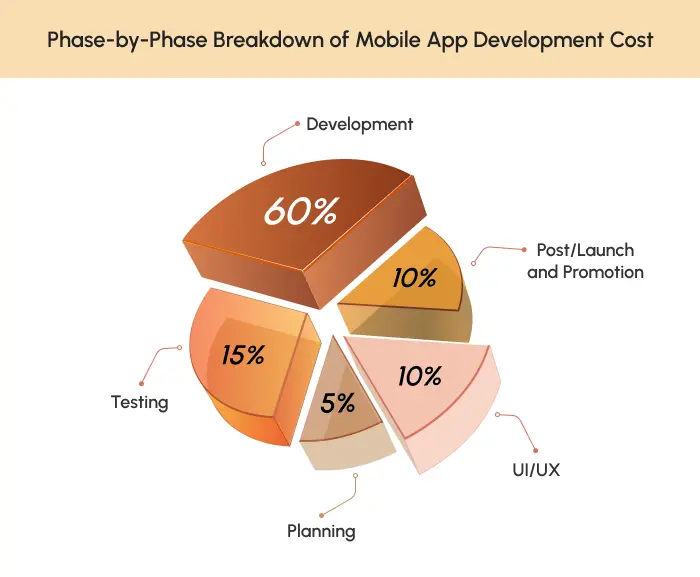
Planning – 5%
The planning phase is the most important first stage. This stage involves requirement analysis, market research, defining app objectives, and selecting the right tech stack. This is an important phase that will help you avoid costly reworks.
UI/UX Design – 10%
The design stage decides the entire user experience of the mobile application. This phase includes wireframing, journey mapping, and designing visually appealing interfaces. That’s why investing in this phase is worthwhile.
Mobile App Development – 60%
In the whole mobile app development, this stage takes up a huge share of the budget. This phase includes frontend and backend development, database setup, API integrations, security implementation, and performance optimization.
Testing & Quality Assurance – 15%
Testing ensures the app functions smoothly across devices, platforms, and real-world scenarios. This testing phase includes functional, performance, security, and bug fixing. Skipping or rushing this stage can lead to poor user experience and negative reviews.
Post-Launch & Promotion – 10%
The post-launch activities focus on maintaining and improving the mobile app after deployment. This includes support, monitoring performance, fixing post-launch bugs, giving updates, adding enhancements, and promotional efforts to improve visibility.
Knowing the allocation of your mobile app development budget will help you make informed decisions, investments, and plan out long-term growth.
Factors Impacting the Mobile App Development Cost
Planned Timeframe
Usually, the complex or quick deadlines would require a larger team or parallel development efforts, which can raise costs. Flexible timelines allow phased development. This might help in managing budgets more effectively.
Platform Selection
Developing for a single platform, either go with Android app development or iOS application development. This would cost less than building for multiple platforms. Choosing between native, hybrid, or cross-platform development will also impact performance and overall cost.
Feature and Tech Stack Integration
Advanced features such as real-time updates, payment systems, AI modules, or third-party APIs require specialized technologies and expertise. The more complex the tech stack, the higher the development and maintenance costs.
Type of Mobile Application
The cost of developing a mobile application largely depends on the nature of the app you develop. Each mobile app type, like healthcare, fintech, banking, e-commerce, and many more, has a different scope and audience. As different type of industry requires unique features, based on the industry type, this cost might have fluctuations.
Project Complexity
Some mobile app development might have a complex development journey. The backend architecture, data handling, user roles, integrations, and scalability requirements determine this. Complex apps require detailed planning, development, and thorough testing, to increases costs.
Geographical Location
Mobile app development costs vary based on the region where the development team is located. Hourly rates, availability of skilled resources, and regional market standards significantly influence the final budget.
Legal Considerations
Compliance with data protection laws, industry regulations, guidelines, and regional policies adds to the development effort. Getting a professional and complete Technology Consultation Service is essential for proper legal validation and documentation.
Expertise of the Development Team
The cost of the mobile app development is majorly impacted by the expertise and experience of the development team. Partnering with a professional mobile app development company like Pixel Web Solution will help you save your efforts on code quality, designing, and more.
Other than these factors that determine the mobile app development cost, there is a possibility of having some additions to it. Without any plan, these hidden costs might add up to the total investment.
Hidden Costs That Add up to the Mobile App Development Cost
Here is a list of some of the minor hidden costs that can influence the final mobile app development costs.
Third Party Subscriptions
The external tools and services need to be integrated into the mobile app. Payment gateways, maps, analytics, cloud storage, push notifications, SMS/email services, and authentication APIs are needed. Usually, adding up these costs might be a one-time cost, but most third-party tools operate on monthly, annual, or usage-based pricing models.
Feature Enhancements
New features or improvements will need to be added after the initial release, based on market trends, user feedback, or business requirements. This might require additional care in design, development, testing, and deployment cycles, increasing both the short-term and long-term budgets.
Post-Launch Support
Even upon launching, a strong and reliable tech support is required. Most top mobile app development companies offer an end-to-end development approach. But some of those wouldn’t, which might influence the final cost. This is important to give a smooth app performance without facing any downtime or crashes.
Marketing & Promotions
Activities aimed at acquiring users, paid ads, influencer campaigns, analytics tools, and referral systems might need consistent efforts. Every app needs visibility to stay in the market. Marketing tools, campaign management, and user acquisition strategies will add to the costs of mobile app development.
Additional Project Complexities
Unexpected technical or operational challenges might emerge in the middle of mobile app development costs. The team might face difficulty in compliance requirements, demands, third-party API changes, or advanced security needs. These complexities often require architecture changes or reworks, increasing development time and allocation.
With all these hidden and influencing costs listed down, you might wonder how we can minimize this overall cost.
How to Minimize the Cost of Developing a Mobile Application?
Minimizing the mobile app development cost doesn’t mean we are compromising on the quality. Choosing the right development approach and following some tips will help you minimize mobile app development costs.
-
- MVP App Development – Start by building a Minimum Viable Product. This will help you incorporate essential features needed for launch. This prevents overbuilding and reduces initial development time and cost.
- Prioritize Features – Not all features need to be built at the beginning. Prioritizing high-impact features helps in avoiding unnecessary development and keeping the budget under control.
- Choose the Right Platform – Launching on a single platform first or opting for cross-platform development is good. This can significantly reduce costs, compared to building multiple native apps simultaneously.
- Ready-made Frameworks – Many top on-demand app development companies offer ready-to-deploy software solutions. Based on your business goals, you can customize the entire software completely.
- Experienced Development Team – Partnering with professionals will help you get faster and scalable mobile applications. This will let you focus on the business setup without facing any hassles.
The most effective way to minimize mobile app development cost is strategic planning. Taking up small, smart decisions at every stage ensures quality and cost efficiency. With all these things listed down, you might wonder,
Is Mobile App Development Worth the Investment?
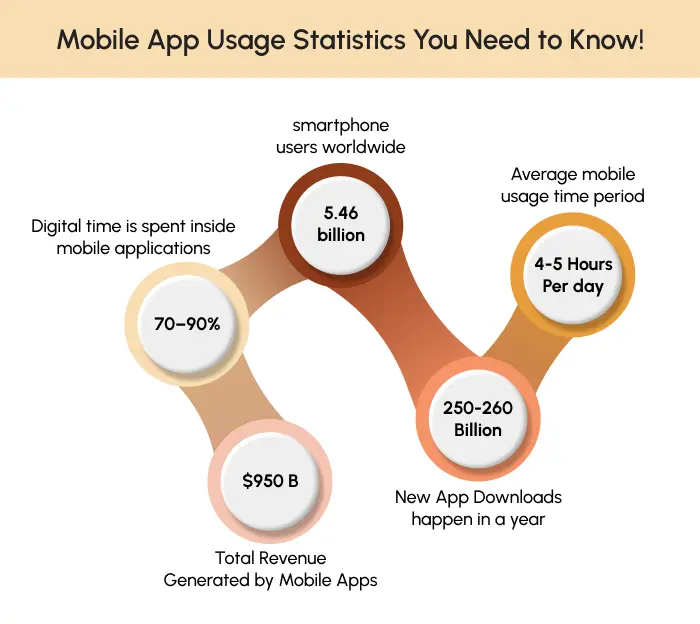
At its core, mobile app development is worth the investment because it gives businesses direct ownership of their audience. Unlike websites or ads that depend on search engines and algorithms, a mobile app will keep your brand just one tap away. This gives you a picture of being visible and accessible. This enables faster interactions, smoother user journeys, personalized offers, and real-time engagement. All of these can be translated into higher customer retention and revenue. More importantly, a well-built app grows with your business, supporting new features, integrations, and monetization models over time. In short, a mobile app isn’t just an additional expense today. This is a strategic asset for long-term scalability and competitive advantage.
Why is Pixel Web Solutions the best Mobile App Development Company?
Pixel Web Solutions stands out as a professional mobile app development company. From idea formation to app store deployment, our approach is structured and focused to give long-term success. What truly sets Pixel Web Solutions apart is the development approach we follow. We combine deep technical expertise with real-world business understanding. We have an in-house team of professionals and developers, who will help you app to evolve as your business grows.